Solar Panel Cleaning Kit: What to Include and How to Use It in Pakistan
A good solar panel cleaning kit has four parts: a telescopic water-fed pole, a soft brush head, a panel-safe cleaning solution and a way to dry the glass without leaving streaks. With these, you can clean rooftop panels from the ground, without climbing on the roof.
The kit pays for itself quickly. Professional cleaning costs money every visit, while a kit lasts for years. The wrong tools cost money too. Kitchen sponges and hard brushes leave scratches, and household soaps can put panel warranties at risk.
This guide explains what each part of a kit does, which bristles and poles to choose, how much local kits cost and how to use one safely. It works for small residential rooftops and for larger commercial systems. Each section starts with the short answer.
What Does a Solar Panel Cleaning Kit Include?
Most kits include an extendable pole, a soft brush, a water connection with an ON/OFF valve, and sometimes a bottle of panel cleaner or a wiper blade. The pole and brush are the core. Everything else is an add-on.
Here is what popular kits sold in Pakistan included when Bloom Pakistan compared them in 2025. Prices change, so check before you buy.
| Kit | Reach | What comes with it | Listed price |
|---|---|---|---|
| BrightTools | 5ft, 12ft or 17ft | Soft nylon bristles, water valve, optional wiper, 400ml cleaner | Rs. 7,699 to Rs. 15,800 |
| Gharsamaan | Up to 17ft | Light aluminium handle, nylon bristles, water valve, free 400ml cleaner | Rs. 7,499 to Rs. 7,699 |
| Ashya Wagera | 12ft | Water inlet, soft bristles | Rs. 11,999 |
| KTools | Adjustable | Soft brush, water valve, ergonomic grip | Rs. 13,000 |
| Pakistan Home Solutions | 8ft to 22ft | Rust-proof steel rod, rubber water line, wide head | Rs. 7,000 to Rs. 15,000 |
The cheapest kit is not always the best value. Check what is included before comparing prices.
Which Brush Bristles Are Safe for Solar Panels?
Choose soft, panel-safe bristles that bend easily and do not shed. Hard plastic or wire bristles can leave fine marks on the glass, and those marks scatter light for the life of the panel.
Soft bristles do the work without force. They lift dust, bird droppings and pollen when you scrub gently with plenty of water. Water also helps the bristles lubricate the surface, so grit slides off instead of dragging across the glass. Dry brushing is a poor habit, because it can build up static that pulls fine grit back onto the panel.
Bloom Pakistan warns that grime left for long periods can lead to discoloration of panels and micro-cracks from heat swings and debris. Cleaning regularly with the right brush helps prevent both.
Avoid improvised tools. A household cloth/mop tends to smear grime, leaves streaks and can trap grit that marks the glass.
Look for a brush that:
- Feels soft when pressed against your skin
- Keeps its bristles after a few washes
- Fits your pole securely without a loose joint
Do You Need a Water-Fed Brush or a Dry Brush?
Get a water-fed brush. It sprays water through the bristles while you clean, so you scrub and wash in one pass and the glass dries streak-free.
A water-fed set connects to an ordinary garden hose. Water runs up a thin hose inside or along the pole and out through small jets in the brush. Some kits add an inline water filter that catches grit and rust before water reaches the panels. Others include a soap dispenser that mixes a little cleaner into the flow.
Use light pressure at the tap. A strong jet can push water into frame seals and junction boxes, and it wastes water on a hot roof.
Start with pre-rinsing. A quick spray loosens grime and washes off loose grit before the bristles touch the glass. Then brush, and finish with a final spray to carry away any soap residue.
A dry brush has one use: sweeping off light, loose powder between proper washes. It should never replace a wet clean.
Which Cleaning Liquid Should Go in Your Kit?
Add a mild, pH-neutral solar panel liquid, mixed at the maker’s ratio. Plain water handles loose grime, but sticky smog and bird mess need a gentle cleaner to lift cleanly.
Feroze Power says dust alone can cut efficiency by up to 20%, and Pakistan’s pollution adds oily grime that water cannot fully remove. A neutral liquid loosens that layer without harming the coating.
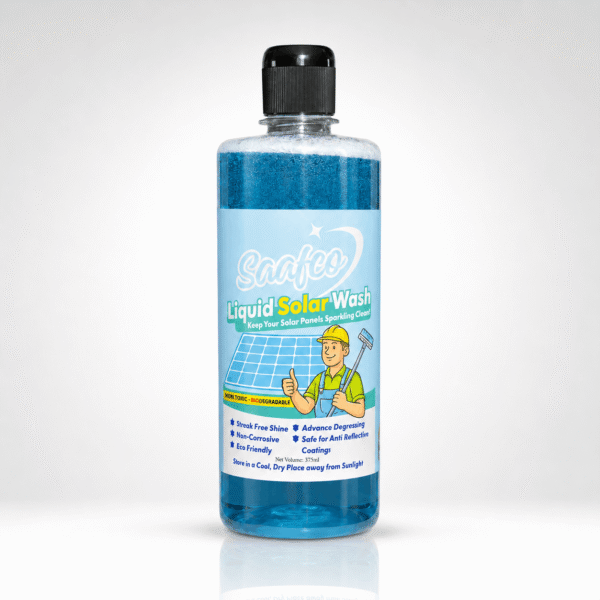
For example, Saafco Solar Panel Cleaner Liquid mixes at 50 ml in 1 litre of water. You can also pour it into a soap dispenser or a pressure washer shampoo bottle.
Water quality matters as much as the liquid. In hard-water areas, tap water dries into white spots. Use filtered water or RO water for the final rinse if you can.
Whatever you choose, avoid dishwashing soap, bleach and ammonia-based glass sprays. For a full guide to pH, ingredients and dilution, read our guide on how to choose a solar panel cleaning liquid.
Which Extra Tools Are Worth Adding to Your Kit?
The most useful extras are a squeegee, a small hand brush for frame edges, and drain clips that stop mud lines forming. Most other add-ons are optional.
A squeegee head fits the same pole as the brush. After washing, one pull from top to bottom clears water before it can air dry into marks. Some kits also include a cobweb duster, which helps clear spider webs and debris from under the panel rows.
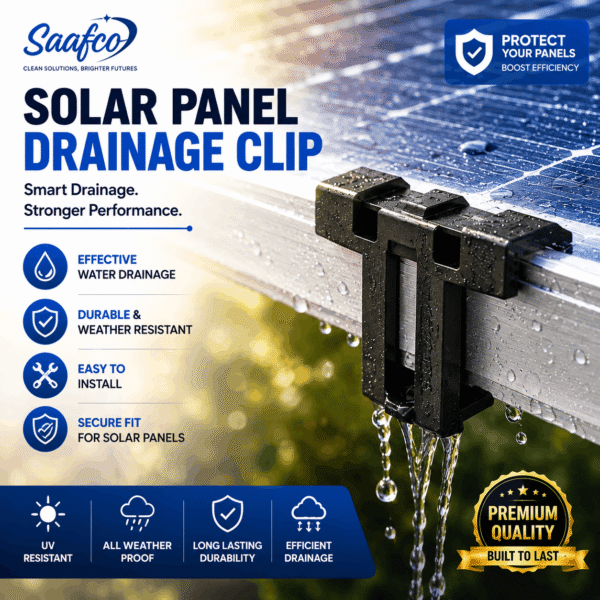
Drain clips prevent dirt rather than remove it. Water often pools along the lower frame edge, then dries into a brown line. A Water Drain Clip lets that water run off. Fit 2–3 clips along the lower edge of each panel.
Check build quality on every add-on. Bloom Pakistan’s review flagged nozzle durability as a weak point on one local kit, and weak plastic fittings are a common complaint on imported kits. A cracked fitting wastes water flow and soaks the person holding the pole.
Is a Telescopic Pole Safer Than Climbing on the Roof?
Yes. A telescopic pole lets you clean from the ground or a parapet, so you avoid standing on panels or climbing a ladder with wet hands.
Rooftop cleaning is working at height, and most falls happen during short, routine jobs. Kit sellers advise users to follow local rules and safe working practices when working above the ground. Keep these rules:
- Never stand or kneel on panels.
- Keep pets and children off the roof.
- Do not lean over an unprotected roof edge.
Imported kits show how far reach can go. The Veebuyla kit pairs a 20-inch brush with a pole that extends to about 24 feet. The IGADPole set reaches 28 feet. The EXTEND-A-REACH set reaches up to 36 feet and carries a 3-year warranty.
Longer is not always better. A pole that is longer than you need is heavier, bends more and is harder to control.
How Much Does a Solar Panel Cleaning Kit Cost in Pakistan?
Most local kits cost between about Rs 7,000 and Rs 16,000, depending on pole length, build quality and what is included. Motorized brushes and pro-grade systems cost much more.
The pole drives most of the price. Kits with a 12–17ft reach suit most rooftop homes. An aluminum pole is standard. Carbon fiber is lighter and stiffer but costs more, so most homes do not need it.
Brush size matters too. A small 25-centimeter head suits tight rows and fits between frames. A wide 20-inch head cleans faster on large flat arrays.
A motorized brush spins the bristles for you. It saves effort on large systems but adds cost and needs charging. Large solar farms use specialized equipment such as robotic cleaners.
Compare that with paying for a crew. Folium’s buying guide puts professional visits in the US at $200 or more each time. A kit has a moderate one-off cost and pays back after a few washes.
How Do You Use a Solar Panel Cleaning Kit Step by Step?
Turn the system off, spray loose grit away, brush with a mild solution, then wash and dry the glass. The whole job takes under an hour for most homes.
- Switch off: turn off the inverter and DC isolator before water touches the panels.
- Set up the pole: extend each section and lock the flip locks or quick-release clasps firmly.
- Pre-spray: fit a nozzle attachment to your hose. Bloom Pakistan lists one for about Rs. 140 at IndustryParts.pk.
- Mix: dilute a panel-safe liquid as directed. Never use harsh detergents.
- Brush: work from top to bottom with soft strokes and steady water.
- Wash off: spray each panel clean. Use deionized or filtered water for this pass if your tap water is hard.
- Dry the edges: wipe frames and corners with a microfiber cloth.
- Check: look for cracks, loose wiring or sediment left in the frame corners.
Is a Cleaning Kit Better Than Hiring a Cleaner?
For most homes, yes. A kit costs less than a few paid visits and lets you clean as soon as panels look dirty. A paid crew still makes sense for very large or very high systems.
Cleaning crews bring tools most homes do not own. They often use reverse-osmosis water and TDS meters to check water purity, which gives a very clean finish. A homeowner with 15 to 30 panels can get close to that with a good kit and purified water.
Timing matters in dusty cities. Bloom Pakistan says grime can cut output by up to 15% per month in places such as Lahore, Islamabad and Karachi. Waiting weeks for a booked crew means lost units.
An all-in-one kit is simple to store and use. Before buying, check replacement parts and repairability, because a broken clamp or brush should not mean buying a whole new set.
What Pole Length Do You Need?
Measure from where you will stand to the top edge of the highest panel, then add 2 to 3 feet. A 20-foot pole suits many single-story homes, while two-story roofs usually need 24 to 30 feet. Check wall thickness, which affects wobble at full length. If you plan to swap heads, a standard ACME thread helps.
Can One Kit Clean Both Home and Factory Panels?
Yes, but large arrays need sturdier tools. Factories and farms often use an electric motor brush to reduce arm fatigue. In one test, a battery model cleaned about 20 panels per charge. For long use, choose high-density or angled bristles over cheap TPR budget brushes.
How Often Should You Use a Solar Panel Cleaning Kit?
Use the kit every few months, and sooner after a dust storm or when generation falls without a clear reason. Clean in the early morning or late evening, when the glass is cool and water will not dry too fast.
Which Saafco Products Fit a Solar Panel Cleaning Kit?
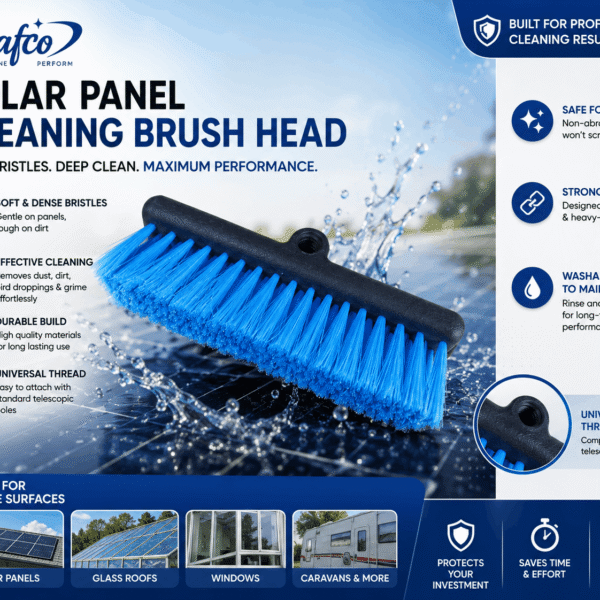
Saafco offers three kit parts. The Saafco Solar Panel Cleaning Brush Head uses soft PVC bristles on a high-strength plastic body and fits water-fed telescopic poles (pole sold separately). Test any brush on the back of your hand: it should feel soft and non-shedding. Soft PVC, fine nylon and boar-hair bristles all pass this test. Add Saafco Solar Panel Cleaner Liquid at 50 ml per 1 litre, and fit Water Drain Clips, 2–3 clips per panel. Most homes clean every 6 to 12 months, or quarterly in dusty or pollen-heavy areas. Clean sooner if output drops 5% or more without a clear cause.
Related guides: How to Choose a Solar Panel Cleaning Liquid · How Often to Clean Solar Panels in Pakistan · Solar Panel Cleaning Machines · Solar Panel Cleaning Hub
Shop Saafco Solar Cleaning Products
-
Saafco Solar Panel Cleaner Liquid 500ml – Streak-Free, Coating-Safe
Solar Panel Cleaners ₨ 650 Add to cart -
Saafco Solar Panel Cleaning Brush Head – Soft PVC Bristles
Solar Panel Cleaners Original price was: ₨ 5,000.₨ 4,550Current price is: ₨ 4,550. Add to cart -
Saafco Solar Panel Water Drain Clip – PV Module Drainage Clip
Solar Panel Cleaners ₨ 100 Add to cart