 Skip to content

Solar energy has become one of the most popular renewable energy solutions for homes, businesses, and industries worldwide. As electricity prices rise and environmental concerns grow, millions of people are investing in photovoltaic (PV) systems to generate clean, affordable electricity.
However, installing solar panels is only the beginning. Like any valuable equipment, solar panels require regular care and maintenance to continue performing efficiently.
One of the most common questions solar owners ask is:
“When to clean solar panels?”
The answer depends on several factors, including your location, weather conditions, dust levels, panel angle, surrounding environment, and system size.
A clean solar panel surface allows maximum sunlight to reach photovoltaic cells, helping maintain electricity production. In contrast, accumulated dust, bird droppings, pollution, and mineral deposits can reduce sunlight absorption and negatively affect energy output.
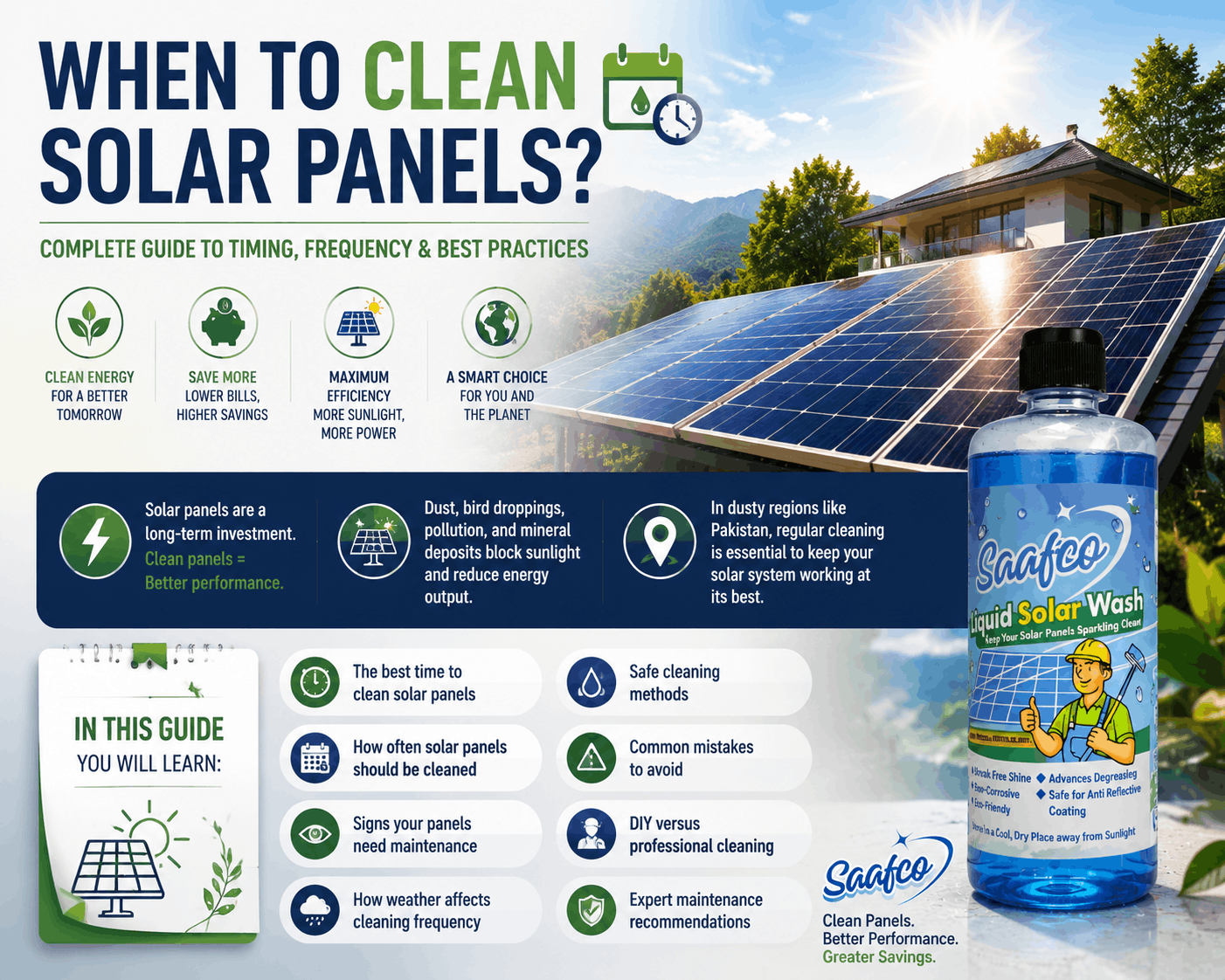
For homeowners and businesses in dusty regions, including many areas of Pakistan, understanding the right solar panel cleaning schedule is essential for protecting their investment.
This guide about When to Clean Solar Panels and explains:
- The best time to clean solar panels
- How often solar panels should be cleaned
- Signs your panels need maintenance
- How weather affects cleaning frequency
- Safe cleaning methods
- Common mistakes to avoid
- DIY versus professional cleaning
- Expert maintenance recommendations
Why Cleaning Solar Panels at the Right Time Matters
Solar panels are designed to operate outdoors for decades. Modern photovoltaic modules typically have a lifespan of 25–30 years, but their performance depends on proper installation and maintenance.
Although solar panels do not contain moving parts, their exposed location makes them vulnerable to environmental contamination.
Common sources of solar panel dirt include:
- Dust and sand particles
- Bird droppings
- Leaves and organic debris
- Industrial pollution
- Vehicle emissions
- Salt particles near coastal regions
- Hard water mineral deposits
When these materials accumulate on the panel surface, they create a barrier between sunlight and solar cells.
Maintaining Maximum Energy Production
Solar panels generate electricity when photons from sunlight reach photovoltaic cells, producing electrical energy.
When dirt covers the surface:
- Less sunlight reaches solar cells
- Electricity generation decreases
- The solar system produces lower energy output
A small amount of dust may not create a major problem, but heavy soiling can significantly affect performance.
For example:
A rooftop solar system installed near a construction area may collect more dust within weeks compared with a system installed in a cleaner residential neighborhood.
Regular inspection and timely cleaning help maintain consistent energy production.
Using a solar-safe cleaning solution such as Saafco Solar Panel Cleaner Liquid helps remove dust, stains, and residues while protecting delicate panel surfaces.
Protecting Your Solar Investment
Solar panels represent a significant financial investment. Proper maintenance helps ensure that the system continues generating electricity efficiently throughout its expected lifespan.
Neglecting cleaning can contribute to:
- Reduced electricity production
- Permanent surface staining
- Difficult-to-remove deposits
- Lower return on investment
Solar maintenance is similar to maintaining a vehicle. Regular small actions prevent expensive problems later.
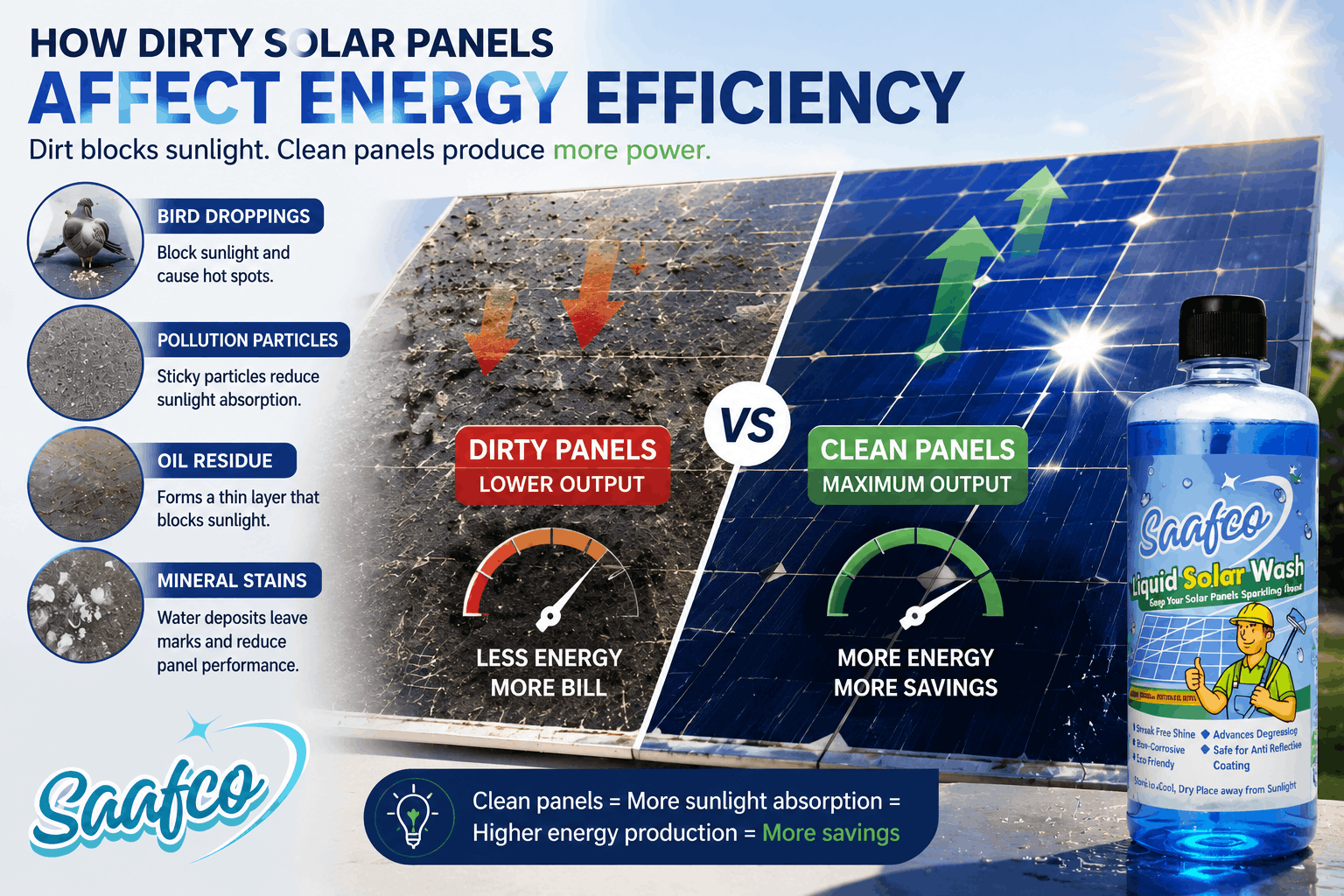
How Dirty Solar Panels Affect Energy Efficiency
Many solar owners assume rain automatically cleans panels. While rain can remove loose dust, it often does not eliminate:
- Bird droppings
- Sticky pollution particles
- Oil residue
- Mineral stains
After rain, water droplets can evaporate and leave behind mineral deposits, especially in areas with hard water.
These deposits may create visible marks and reduce the amount of sunlight reaching photovoltaic cells.
How Often Should You Clean Solar Panels?
There is no single cleaning schedule that works for every solar installation.
The ideal frequency depends on environmental conditions.
General Recommendation
Most residential solar panels should be cleaned:
Every 1–2 months (But as you know, most of Pakistan is Polluted and dust storms are regular, so monthly service is required for full potential)
However, some locations may require more frequent cleaning.
Solar Panel Cleaning Frequency by Location
| Location Type | Recommended Cleaning Frequency |
| Clean residential areas | Every 2–3 months |
| Normal urban areas | Every 1–2 months |
| Dusty cities | Every months |
| Agricultural areas | Every month |
| Industrial zones | 2 times a month |
| Coastal areas | Every month |
| Commercial solar farms | Scheduled quarterly maintenance |
Cleaning Solar Panels in Pakistan: Regional Considerations
Pakistan has diverse environmental conditions, which means solar cleaning requirements vary greatly.
Punjab Region
Cities and agricultural areas may experience:
- Crop dust
- Road dust
- Construction particles
So Solar panels may require cleaning every month depending on location.
Examples:
- Lahore
- Faisalabad
- Multan
Sindh Region
Hot and dry conditions can increase:
- Dust accumulation
- Sand deposits
- Surface contamination
Examples:
- Karachi
- Hyderabad
- Sukkur
Coastal areas may also experience salt particles that require attention.
Northern Areas
Although temperatures are lower, panels may collect:
- Dust
- Leaves
- Seasonal debris
Snow and rain conditions should also be considered.
Best Time of Year to Clean Solar Panels
The ideal cleaning season depends on your local climate.
Spring Cleaning
Spring is often a good time to inspect solar panels because:
- Winter debris may have accumulated
- Dust levels may increase
- Solar production demand rises
Summer Maintenance
Summer usually requires more attention because:
- Dust accumulation increases
- Temperatures are high
- Electricity demand is higher
Keeping panels clean during summer helps maximize energy generation. In summer, the requirement is more so every month; cleaning is compulsory.
Monsoon Season
Rain can provide temporary cleaning, but after heavy rainfall, inspect panels for:
- Mud marks
- Water stains
- Bird residue
After Dust Storms
Dust storms can cover panels quickly.
Always inspect solar panels after:
- Strong winds
- Dust storms
- Severe weather events
Signs Your Solar Panels Need Cleaning
Many solar owners wait until panels look visibly dirty before cleaning them. However, solar panels can lose performance before dirt becomes obvious.
Regular inspection helps identify cleaning requirements early and prevents unnecessary energy losses.
1. Visible Dust and Dirt Accumulation
The most obvious sign that solar panels need cleaning is visible surface contamination.
Common materials that accumulate on solar panels include:
- Dust particles
- Sand
- Leaves
- Pollen
- Bird droppings
- Industrial pollution
- Road dust
In dry climates and urban areas, fine dust particles can settle on the glass surface and reduce sunlight transmission.
For example, a rooftop solar system located near:
- Construction sites
- Busy roads
- Agricultural fields
- Desert environments
may require cleaning much more frequently than a system installed in a cleaner residential area.
2. Reduced Electricity Production
One of the most reliable indicators of dirty solar panels is a decrease in energy output.
Modern solar systems usually include:
- Solar monitoring apps
- Inverter performance reports
- Energy generation dashboards
These tools allow owners to compare current production with previous performance.
If electricity generation suddenly drops without changes in:
- Weather conditions
- Electricity usage
- System components
Dirty panels may be one possible cause.
3. Bird Droppings on Panel Surfaces
Bird droppings are different from normal dust because they create concentrated blockage areas.
Unlike dust, rain often does not remove them completely.
Bird droppings can:
- Block sunlight from reaching photovoltaic cells
- Create stubborn stains
- Cause uneven energy production across the panel
They should be removed carefully using appropriate cleaning methods rather than scraping with hard materials.
4. Water Marks and Mineral Deposits
Rainwater and tap water can leave behind mineral residue after evaporation.
These deposits appear as:
- White marks
- Cloudy patches
- Streaks on glass surfaces
This is especially common in areas with hard water.
Using filtered water or a solar-safe cleaning solution can help prevent residue buildup.
5. Moss, Algae, or Organic Growth
In humid environments, shaded areas may experience:
- Moss growth
- Algae buildup
- Organic residue
This usually occurs when:
- Panels receive limited sunlight
- Water remains on surfaces
- Nearby vegetation creates moisture
Best Time of Day to Clean Solar Panels
Timing matters because solar panels can become extremely hot during the day.
The ideal cleaning time is when panels are cool.
Early Morning Cleaning
Early morning is often considered the best time because:
✓ Panels are cooler
✓ Water evaporates slowly
✓ Cleaning is safer
✓ Less risk of thermal stress
Morning cleaning also allows the solar system to operate efficiently throughout the rest of the day.
Late Afternoon Cleaning
Late afternoon is another suitable option.
Advantages:
- Lower temperatures
- Reduced sunlight intensity
- Safer working conditions
Avoid Midday Cleaning
Cleaning during peak sunlight hours is generally not recommended.
Reasons:
- Hot glass surfaces may experience thermal stress
- Water dries quickly and leaves marks
- Working conditions become unsafe
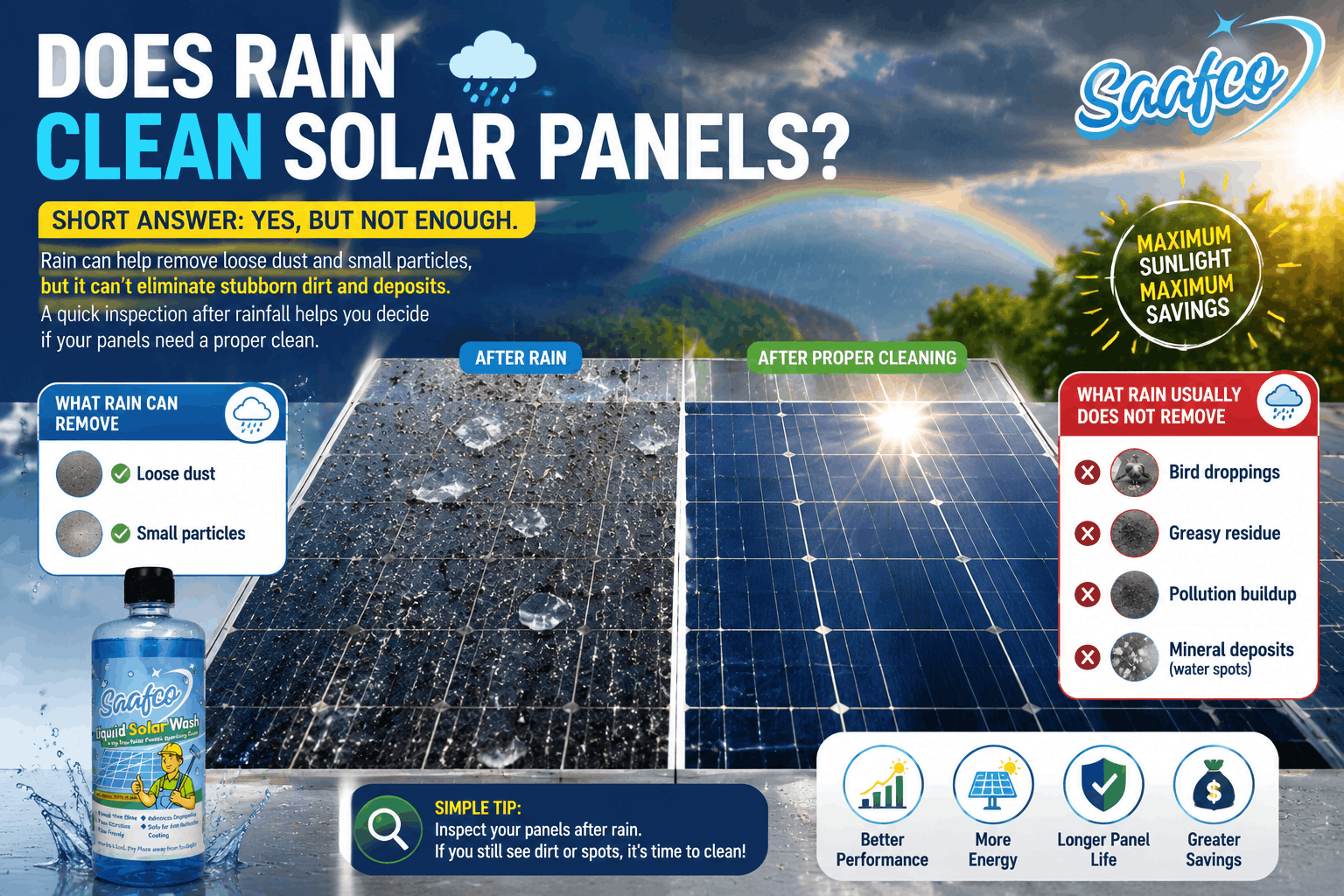
Does Rain Clean Solar Panels?
A common question among solar owners is:
“Do I still need to clean solar panels if it rains?”
The answer is usually yes.
Rain can remove:
- Loose dust
- Small particles
However, rain usually does not remove:
- Bird droppings
- Greasy residue
- Pollution buildup
- Mineral deposits
In some cases, rain can even leave behind water spots after evaporation.
A simple inspection after rainfall helps determine whether additional cleaning is required.
How Weather Conditions Affect Solar Panel Cleaning
Environmental conditions play a major role in determining cleaning frequency.
Dusty and Dry Environments
Dry climates often experience:
- Wind-blown dust
- Sand particles
- Reduced rainfall
Examples:
- Desert regions
- Agricultural zones
- Areas near construction
These locations usually require more frequent cleaning.
Urban Pollution
City environments expose solar panels to:
- Vehicle emissions
- Industrial particles
- Smog
- Road dust
Large cities may need regular solar panel inspections.
Examples:
- Karachi
- Lahore
- Islamabad
- Rawalpindi
Coastal Locations
Coastal environments create unique challenges.
Salt particles from sea air can settle on panel surfaces.
Over time, salt buildup may affect:
- Surface clarity
- Panel performance
- Long-term maintenance requirements
Agricultural Areas
Solar systems installed near farmland may collect:
- Soil particles
- Crop residue
- Pollen
Seasonal farming activities can increase cleaning requirements.
How to Clean Solar Panels Safely: Step-by-Step Guide
Proper technique is essential because incorrect cleaning can damage expensive equipment.
Step 1: Turn Off the Solar System
Before cleaning:
- Switch off the inverter
- Follow manufacturer instructions
- Avoid touching electrical connections
Solar panels generate electricity whenever exposed to sunlight, so safety should always come first.
Step 2: Inspect the Panels
Before cleaning, check for:
- Cracks
- Loose wiring
- Damaged frames
- Heavy stains
- Physical damage
Inspection helps identify issues beyond simple dirt accumulation.
Step 3: Remove Loose Dust
Use:
- Soft solar cleaning brush
- Microfiber cloth
- Gentle water spray
Avoid:
- Hard brushes
- Rough sponges
- Abrasive materials
These can create small scratches that reduce panel performance over time.
Step 4: Apply a Solar-Safe Cleaning Solution
A dedicated solar panel cleaner is designed to remove contamination without harming the panel surface.
A quality cleaner should be:
- Non-abrasive
- Surface-safe
- Effective against dust and stains
- Easy to rinse
Saafco Solar Panel Cleaner Liquid provides a safe cleaning option for removing dirt, marks, and residues while helping maintain a clean, streak-free surface.
Step 5: Rinse With Clean Water
After applying cleaner:
- Rinse remaining residue
- Avoid excessive pressure
- Prevent water from entering electrical components
Using clean water helps prevent additional mineral deposits.
Step 6: Dry and Inspect Again
After cleaning:
Check:
- Surface clarity
- Remaining stains
- Panel condition
- Energy production
A clean surface should allow maximum sunlight exposure. For fast drying, solar water drain Clips are recommended.
Common Solar Panel Cleaning Mistakes to Avoid
Many solar owners accidentally damage panels by using incorrect methods.
1. Using Harsh Chemicals
Avoid:
- Bleach
- Strong acids
- Household chemicals (Surf, liquid Dishwash)
- Abrasive cleaners
These products may damage:
- Anti-reflective coatings
- Protective layers
- Glass surfaces
2. Using High-Pressure Water
High-pressure washing can damage:
- Panel seals
- Electrical connections
- Internal components
Using a pressure washer is normal in solar cleaning, and it is the safest and quickest method if done by professionals. They use a pressure washer which have pressure under 110 bars, and they use it at low pressure.
3. Cleaning With Rough Materials
Avoid:
- Steel wool
- Hard brushes
- Rough cleaning pads
Even small scratches can reduce long-term performance.
4. Walking on Solar Panels
Solar panels are strong but not designed to support human weight normally, but some professionals do it according to SOPs, which is safe according to local company research; a solar panel can handle weight up to 120 kg, so most professional companies hire young boys for this job under a weight of 70 kgs.
Walking on panels can cause:
- Microcracks
- Cell damage
- Reduced efficiency
5. Cleaning During Extreme Heat
Avoid cleaning when panels are extremely hot.
Problems include:
- Rapid water evaporation
- Streak formation
- Thermal stress
DIY Solar Panel Cleaning vs Professional Cleaning
Choosing between DIY and professional cleaning depends on:
- System size
- Accessibility
- Safety risks
- Installation height
DIY Solar Panel Cleaning
Suitable for:
✓ Small residential systems
✓ Easily accessible rooftops
✓ Safe working environments
Required equipment:
- Soft brush
- Microfiber cloth
- Solar-safe cleaning solution
- Clean water
Products like Saafco Solar Panel Cleaner Liquid can help homeowners maintain panel cleanliness safely.
Professional Solar Panel Cleaning
Professional services are recommended for:
- Large commercial systems
- Solar farms
- High rooftops
- Difficult installations
Professionals use:
- Specialized cleaning equipment
- Safety harnesses
- Water filtration systems
- Commercial maintenance techniques
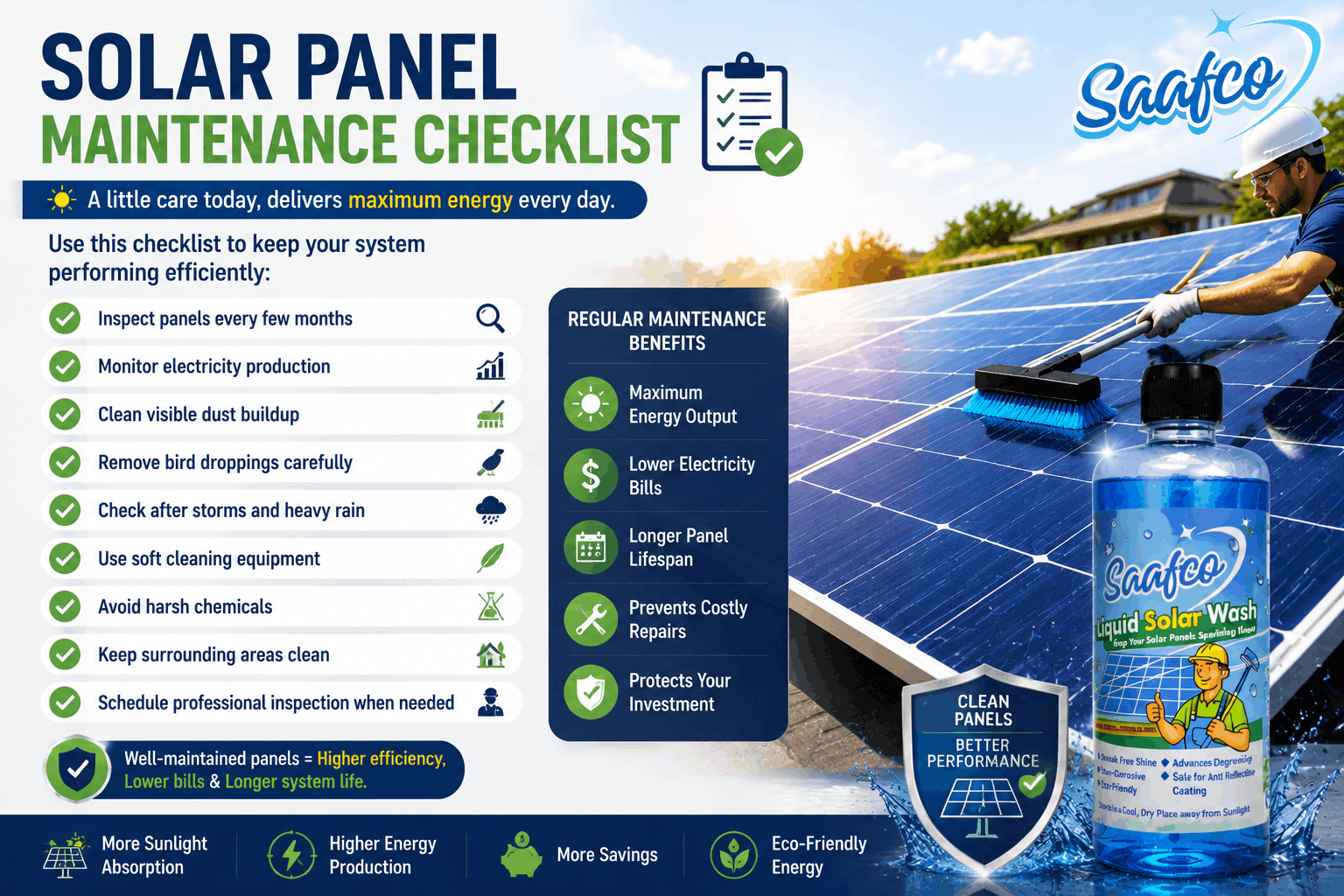
Solar Panel Maintenance Checklist
Use this checklist to keep your system performing efficiently:
✓ Inspect panels every few months
✓ Monitor electricity production
✓ Clean visible dust buildup
✓ Remove bird droppings carefully
✓ Check after storms and heavy rain
✓ Use soft cleaning equipment
✓ Avoid harsh chemicals
✓ Keep surrounding areas clean
✓ Schedule professional inspection when needed
How Much Does Solar Panel Cleaning Cost?
The cost of solar panel cleaning depends on several factors:
- Number of solar panels
- System size
- Roof accessibility
- Level of dirt accumulation
- Location
- Cleaning method used
A small residential solar system is usually easier and cheaper to clean than a large commercial solar installation.
Factors Affecting Solar Panel Cleaning Cost
| Factor | Impact on Cost |
| Number of panels | More panels require more labor and time |
| Roof height | Higher roofs require additional safety equipment |
| Dirt level | Heavy stains require deeper cleaning |
| Location | Remote areas may increase service costs |
| Cleaning method | Manual and automated systems have different costs |
Is Solar Panel Cleaning Worth the Cost?
Many homeowners question whether professional cleaning is worth paying for.
The answer depends on:
- Local weather conditions
- Dust levels
- Solar system size
- Electricity production goals
For large solar systems, even a small improvement in energy production can justify maintenance costs.
Example:
A commercial solar installation generating thousands of kilowatt-hours annually may lose significant energy output if panels remain heavily covered with dust.
Regular maintenance helps protect:
- Energy production
- Equipment lifespan
- Financial returns
Expert Recommendations for Solar Panel Maintenance
Solar professionals generally recommend a preventive maintenance approach instead of waiting until performance problems appear.
A good solar maintenance strategy includes:
1. Regular Visual Inspections
Inspect panels regularly for:
- Dust buildup
- Bird droppings
- Cracks
- Shading issues
- Loose connections
A simple monthly visual check can identify problems early.
2. Monitor Solar Performance
Modern systems often include:
- Inverter monitoring
- Mobile applications
- Energy tracking dashboards
Monitoring helps detect unusual production drops.
A sudden decrease in electricity generation may indicate:
- Dirty panels
- Equipment issues
- Shading problems
3. Maintain Surrounding Areas
The environment around solar panels also affects cleanliness.
Keep nearby areas free from:
- Excessive dust sources
- Overgrown vegetation
- Leaves
- Debris
Cleaner surroundings reduce contamination.
Long-Term Solar Panel Care Strategy
A complete solar maintenance plan should focus on prevention.
Year-Round Maintenance Plan
Monthly
- Check energy output
- Inspect visible dirt
- Look for shading problems
Every 2–3 Months
- Perform proper panel cleaning
- Remove dust and stains
- Inspect panel condition
After Extreme Weather
Inspect after:
- Dust storms
- Heavy rainfall
- Strong winds
- Construction activity nearby
Annually
Consider:
- Professional inspection
- Electrical system check
- Performance evaluation
Solar Panel Cleaning Schedule Based on Environment
| Environment | Recommended Approach |
| Clean residential area | Inspect every few months, clean when needed |
| Dusty urban area | Frequent inspection and quarterly cleaning |
| Agricultural location | Regular cleaning due to soil particles |
| Coastal environment | Monitor salt buildup |
| Industrial area | More frequent maintenance |
| Solar farm | Scheduled professional cleaning |
The Best Tools for Cleaning Solar Panels
Using the correct tools prevents damage.
Recommended tools:
Soft Solar Cleaning Brushes
Benefits:
- Remove dust safely
- Prevent scratches
- Reach difficult areas
Microfiber Cloths
Useful for:
- Removing marks
- Drying surfaces
- Final polishing
Solar Panel Cleaning Liquid
A specialized cleaner helps remove:
- Dust
- Surface stains
- Bird residue
- Pollution particles
Saafco Solar Panel Cleaner Liquid is designed for safe solar surface cleaning while helping maintain a clear, streak-free finish.
Water Quality Considerations
Water quality matters.
Hard water may leave:
- Mineral deposits
- White stains
- Surface marks
Where possible, cleaner water sources can help reduce residue.
Why Professional Solar Cleaning Services Are Sometimes Necessary
Although many homeowners can clean accessible panels themselves, professional services provide advantages for larger systems.
Professionals can offer:
- Safer rooftop access
- Specialized equipment
- Better cleaning consistency
- Reduced risk of accidental damage
Professional cleaning is especially useful for:
- Commercial buildings
- Schools
- Factories
- Large solar farms
Future of Solar Panel Maintenance
The solar industry is moving toward smarter maintenance solutions.
Future technologies include:
Automated Solar Cleaning Systems
These systems use:
- Robotic cleaners
- Automated brushes
- Smart scheduling
They are especially useful for large solar farms.
Solar Monitoring Technology
Artificial intelligence and advanced monitoring systems can identify:
- Performance drops
- Cleaning requirements
- Equipment problems
Water-Saving Cleaning Methods
New methods focus on:
- Reduced water usage
- Eco-friendly solutions
- Efficient cleaning processes
Frequently Asked Questions (FAQ)
When is the best time to clean solar panels?
The best time to clean solar panels is usually early morning or late afternoon when panels are cooler. Avoid cleaning during peak sunlight hours because hot surfaces can create safety issues and water marks.
How often should solar panels be cleaned?
Most residential solar panels should be cleaned every 3–6 months. However, dusty, polluted, agricultural, or coastal areas may require more frequent cleaning.
Do solar panels need cleaning after rain?
Yes. Rain removes loose dust but usually does not remove bird droppings, mineral deposits, and sticky pollution residue.
What happens if you never clean solar panels?
Neglected solar panels may experience:
- Reduced electricity production
- More difficult-to-remove stains
- Lower system efficiency
- Reduced return on investment
Can dirty solar panels reduce electricity production?
Yes. Dirt blocks sunlight from reaching photovoltaic cells, which can reduce energy generation depending on the level of contamination.
Can I clean solar panels myself?
Yes, if panels are easily accessible and safety risks are low. Use soft brushes, microfiber cloths, and solar-safe cleaning products.
Should solar panels be cleaned in summer?
Yes. Summer dust accumulation can affect energy production. Cleaning before high-demand periods helps maintain efficiency.
Can I use normal household soap on solar panels?
Some household cleaners may contain chemicals that can damage panel surfaces. A solar-specific cleaning product is generally a safer choice.
What is the safest way to clean solar panels?
The safest method is:
- Turn off the system
- Use soft cleaning tools
- Apply a solar-safe cleaner
- Avoid harsh chemicals
- Avoid high-pressure washing
When to Clean Solar Panels: The Right Timing Protects Your Investment
Solar panel cleaning is not just about keeping panels looking attractive. It is an essential part of maintaining energy efficiency, protecting equipment, and maximizing the return from your renewable energy investment.
The ideal cleaning schedule depends on your environment. Homes in cleaner areas may only require cleaning every few months, while solar systems in dusty cities, agricultural regions, industrial zones, or coastal environments may need more frequent maintenance.
Regular inspections, proper cleaning methods, and the right products help prevent performance problems and extend the useful life of photovoltaic systems.
Using a safe and effective solution such as Saafco Solar Panel Cleaner Liquid helps remove dust, stains, and residues while protecting panel surfaces. Combined with proper tools and maintenance habits, it allows solar owners to keep their systems operating efficiently.
A few minutes of regular inspection and timely cleaning can help ensure that your solar panels continue producing clean energy efficiently for many years.