 Skip to content

Clean glassware can make an ordinary dining table look polished and welcoming. However, drinking glasses, tumblers, jars, and serving dishes can quickly collect fingerprints, grease, detergent film, and dried water spots.
This problem can be particularly noticeable in Pakistani kitchens, where dust, frequent cooking and mineral-rich water may affect the appearance of glass items. Even after washing, glasses can sometimes look cloudy, dull or streaked.
The right glassware cleaner helps remove everyday residue without scratching the surface or leaving an unpleasant film. This guide explains what to look for, how to clean glassware correctly, and which Saafco dishwashing products can support daily glassware care.
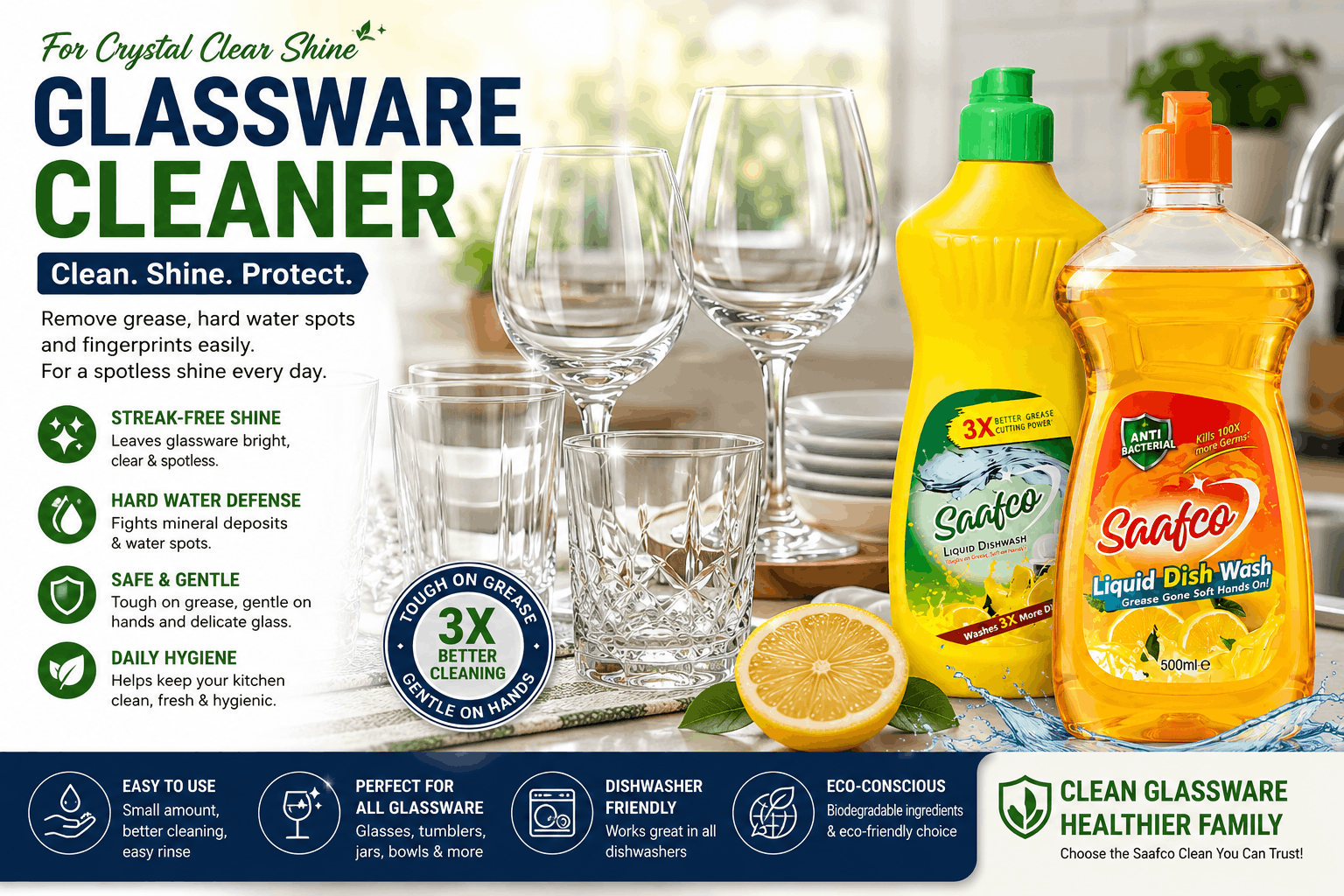
A glassware cleaner is a gentle cleaning product designed to remove grease, fingerprints, water spots, and mineral buildup from drinking glasses and kitchen glass items. For best results, use a small amount with a soft sponge, rinse thoroughly with clean water and dry with a lint-free cloth to prevent streaks and cloudiness.
What Is a Glassware Cleaner?
A glassware cleaner is a cleaning product used to remove grease, food residue, fingerprints, detergent film and water marks from glass items.
For kitchen use, this may include a mild liquid dishwash formulated to clean:
- Drinking glasses
- Glass cups and mugs
- Tumblers
- Glass bowls
- Serving dishes
- Jars and bottles
- Heat-resistant glass cookware
A good cleaner should rinse away easily and leave the surface visibly clear without an oily or soapy coating.
What Is the Best Cleaner for Everyday Glassware?
For everyday drinking glasses and kitchen glassware, a grease-cutting liquid dish wash that rinses easily is usually the most practical choice.
Saafco Liquid Dish Wash is designed for regular dishwashing and is promoted for grease removal, long-lasting foam and a clear finish on glassware and other utensils. Saafco Anti-Bacterial Liquid Dish Wash is another option for households that want everyday grease removal with additional antibacterial cleaning benefits.
Always follow the directions on the product label and rinse food-contact items thoroughly with clean water.
Why Does Glassware Become Cloudy?
Cloudy glassware is usually caused by one of three problems:
Hard-water mineral deposits
Hard water contains minerals such as calcium and magnesium. When droplets dry on the surface, these minerals may remain behind as white spots or a cloudy film.
Excess detergent or incomplete rinsing
Using too much detergent can leave residue on glasses, especially when they are rinsed with a small amount of water.
Permanent etching
Repeated exposure to strong detergents, high dishwasher temperatures or abrasive cleaning can gradually damage the surface of some glasses. This permanent damage is known as etching.
Mineral buildup can often be removed, but permanently etched glass may remain cloudy even after deep cleaning.
Why Is Ordinary Washing Sometimes Not Enough?
A standard washing routine may remove food and grease but still leave mineral marks, fingerprints or detergent residue behind.
Glassware needs a cleaning method that provides:
- Effective grease removal
- Thorough rinsing
- Minimal residue
- Gentle handling
- Proper drying
The cleaning tool also matters. Rough scrubbers and abrasive powders can create fine scratches that make glass appear dull over time.
Important Features to Look for in a Glassware Cleaner
Effective grease-cutting action
Cooking oil, lipstick, milk residue, and fingerprints can leave a thin film on drinking glasses. The cleaner should break down this film without requiring excessive scrubbing.
Easy-rinse formula
A cleaner that rinses away easily is less likely to leave a soapy layer or affect the appearance of glassware.
Non-abrasive cleaning
Avoid abrasive powders and rough metal scrubbers on delicate glass. A liquid formula used with a soft sponge is generally more suitable for routine washing.
Suitability for food-contact items
Use products intended for dishes and kitchen utensils. Do not use window, bathroom, automotive or solar-panel cleaners on drinking glasses unless the label explicitly states that they are suitable for food-contact surfaces.
Pleasant but mild fragrance
A strong fragrance may remain noticeable if the item is not rinsed properly. Regardless of fragrance strength, rinse every glass thoroughly before use.
Clear usage instructions
A dependable product should explain how much cleaner to use, whether dilution is needed and what surfaces it can safely clean.
Best Saafco Options for Cleaning Glassware
Saafco 3x Liquid Dish Wash
Saafco Liquid Dish Wash is a practical option for everyday cleaning of drinking glasses, plates, bowls, steel utensils and cookware.
Its main benefits include:
- Strong grease-cutting action
- Long-lasting foam
- Easy application with a sponge
- Suitability for everyday dishwashing
- A clean, polished appearance after rinsing
It is best suited to glasses affected by fingerprints, food residue, oily film and regular kitchen dirt.
Saafco Anti-Bacterial Liquid Dish Wash
Saafco Anti-Bacterial Liquid Dish Wash combines dishwashing performance with added antibacterial cleaning.
It may be suitable for busy family kitchens where users want:
- Grease and food-residue removal
- Regular cleaning of frequently used utensils
- Added attention to kitchen hygiene
- A fresh finish after washing
A dishwashing product can help clean the surface, but correct washing, complete rinsing, clean storage and good hand hygiene are also essential parts of safe kitchen practice.
Saafco Liquid Dish Wash vs. Anti-Bacterial Dish Wash
| Feature | Saafco Liquid Dish Wash | Saafco Anti-Bacterial Liquid Dish Wash |
|---|---|---|
| Best use | Everyday dish and glassware cleaning | Everyday cleaning with added antibacterial action |
| Main purpose | Grease and residue removal | Grease removal and hygiene-focused cleaning |
| Suitable for glassware | Yes, when used as directed | Yes, when used as directed |
| Ideal household | General daily kitchen use | Busy kitchens with greater hygiene concerns |
| Rinsing required | Yes | Yes |
How to Clean Glassware Properly by Hand
Follow these steps for clearer, cleaner glassware:
1. Remove leftover contents
Empty the glass and rinse away loose food or drink residue.
2. Fill the sink or bowl with water
Use comfortably warm water. Extremely hot water can create thermal stress in cold or delicate glass.
3. Use a small amount of dishwashing liquid
Apply a small quantity to a damp sponge or dilute it in washing water according to the label instructions.
Using excessive detergent does not necessarily improve cleaning and may make rinsing more difficult.
4. Wash with a soft sponge
Clean the inside, outside, base and rim gently. Avoid steel wool, rough brushes and abrasive pads.
5. Rinse thoroughly
Hold the glass under clean running water until no foam, slipperiness or fragrance residue remains.
6. Dry correctly
Place the glass on a clean drying rack or dry it using a lint-free microfiber cloth.
Avoid using a cloth that has absorbed cooking oil, dust or strong laundry fragrance.
How to Remove Hard-Water Spots from Glassware
If normal glassware cleaner does not remove white spots or cloudiness, the problem may be mineral buildup.
Try the following method:
- Place the affected glass in a bowl or basin.
- Add a solution of white vinegar and warm water.
- Allow the glass to soak briefly.
- Wash it gently with dishwashing liquid and a soft sponge.
- Rinse thoroughly with clean water.
- Dry immediately with a lint-free cloth.
White vinegar can help dissolve calcium and magnesium deposits responsible for many hard-water marks.
Do not mix vinegar with bleach or chlorine-based cleaners. Avoid prolonged acidic soaking on decorated, metallic-rimmed, antique or specially coated glassware.
How Can You Tell Whether Cloudiness Is Permanent?
Apply a small amount of white vinegar to one cloudy area and leave it for a few minutes.
If the area becomes clearer after washing and rinsing, the cloudiness was probably caused by mineral deposits.
If there is no visible improvement, the glass may be permanently etched or scratched. Permanent etching cannot usually be removed with ordinary cleaning.
How to Prevent Water Spots and Cloudiness
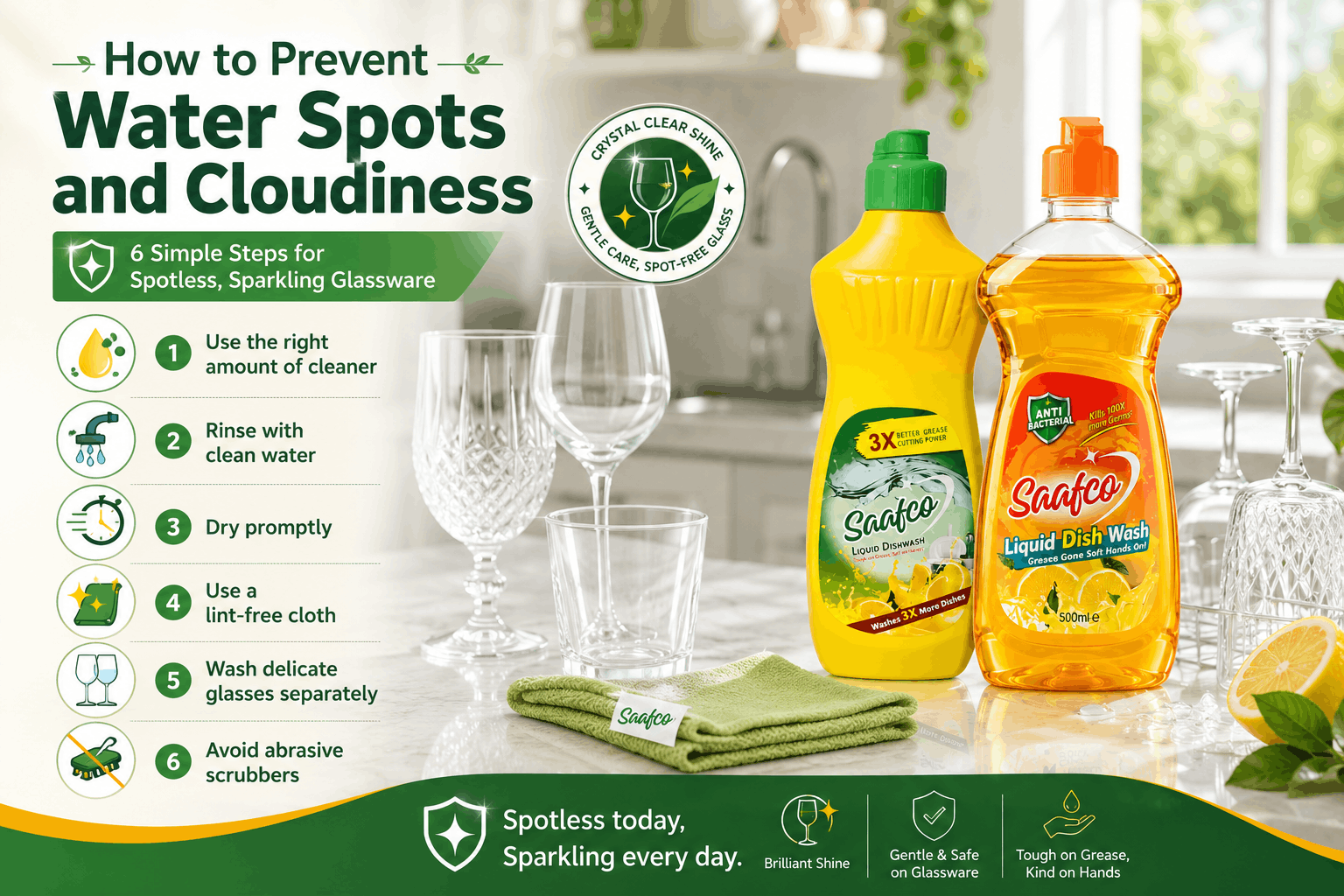
Use the correct amount of glassware cleaner
Too much detergent may leave residue and require additional rinsing.
Rinse with clean water
Dirty or heavily soapy rinse water can redeposit residue on the surface.
Do not leave droplets to dry
Minerals become more visible when water evaporates naturally. Drying the glass promptly can help reduce spotting.
Use a lint-free cloth
A clean microfiber cloth helps polish the surface without leaving lint behind.
Wash delicate glasses separately
Crystal, thin glass, and decorative pieces can knock against heavier dishes and become chipped or scratched.
Avoid abrasive cleaning products
Fine scratches can trap residue and make future cleaning more difficult.
Can Glassware Be Washed in a Dishwasher?
Many everyday glasses are dishwasher-safe, but the manufacturer’s care instructions should always be checked first.
For better dishwasher results:
- Place glasses securely so they cannot touch one another.
- Avoid overcrowding the rack.
- Use the recommended amount of detergent.
- Add rinse aid where appropriate.
- Select a gentle cycle for delicate items.
- Remove glasses after the cycle instead of exposing them to unnecessary heat.
- Hand-wash crystal, antique, decorated or fragile glassware.
Repeated exposure to strong detergent and high temperatures may contribute to permanent etching on certain types of glass.
Common Glassware Cleaning Mistakes
Using a window cleaner on drinking glasses
Window cleaners are not automatically suitable for food-contact items. Use a dishwashing product intended for kitchen utensils.
Scrubbing with steel wool
Metal scrubbers may create permanent scratches.
Using too much detergent
Excess detergent can leave a film and increase rinsing time.
Drying with a dirty kitchen towel
A used towel may transfer grease, odour, lint or bacteria back to clean glassware.
Stacking glasses while damp
Trapped moisture can cause odours and visible marks. Let each item dry fully before storing it.
Using one cleaner for every kind of glass
Drinking glasses, mirrors, shower screens, solar panels and vehicle windows have different cleaning requirements. A product made for one application should not automatically be used for another.
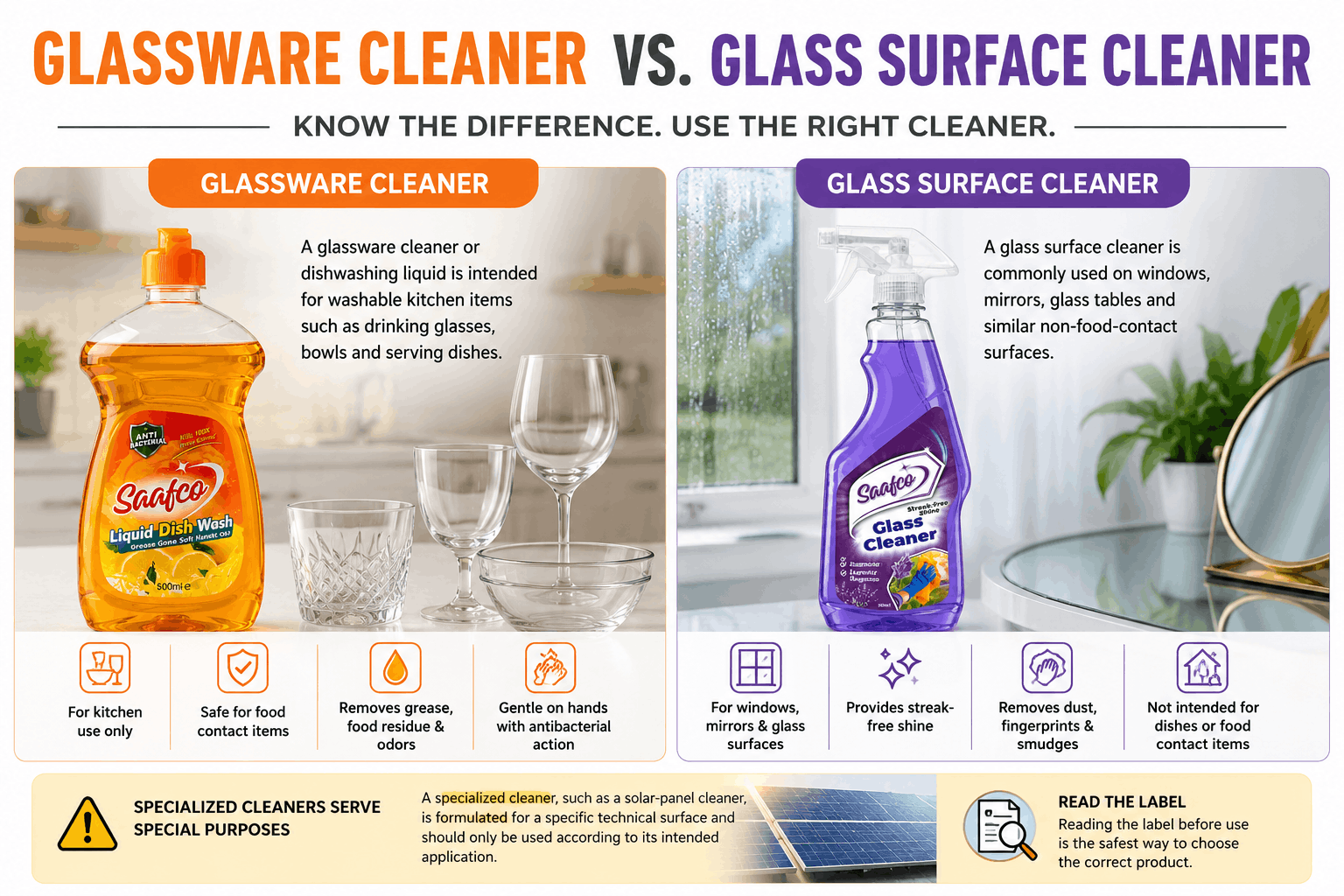
Glassware Cleaner vs. Glass Surface Cleaner
These products serve different purposes.
A glassware cleaner or dishwashing liquid is intended for washable kitchen items such as drinking glasses, bowls and serving dishes.
A glass surface cleaner is commonly used on windows, mirrors, glass tables and similar non-food-contact surfaces.
A specialized cleaner, such as a solar-panel cleaner, is formulated for a specific technical surface and should only be used according to its intended application.
Reading the label before use is the safest way to choose the correct product.
Eco-Conscious Glassware Cleaning Tips
You can reduce waste while maintaining clean glassware by:
- Using only the recommended quantity of detergent
- Washing a full group of dishes instead of one item at a time
- Turning off running water while scrubbing
- Reusing a washable microfiber cloth
- Choosing durable sponges and brushes
- Recycling empty packaging where local facilities allow it
The most sustainable cleaner is not simply the one with an environmental claim. Its ingredients, concentration, packaging, transport requirements and correct dosage all affect its overall environmental impact.
Where Can You Buy Saafco Dishwashing Products?
Saafco Liquid Dish Wash and Saafco Anti-Bacterial Liquid Dish Wash are available through Saafco’s official online store.
Buying directly from the brand allows customers to check:
- Current bottle sizes
- Product variants
- Usage instructions
- Prices
- Bundle options
- Availability
Product information and pricing may change, so review the individual product page before ordering.
Frequently Asked Questions
What is the best Glassware cleaner for drinking glasses?
A mild, easy-rinse liquid dish wash designed for kitchen utensils is suitable for most everyday drinking glasses. Use it with a soft sponge and rinse thoroughly.
Why do my glasses still look cloudy after washing?
Cloudiness may come from hard-water minerals, excess detergent, scratches or permanent etching. A brief vinegar test can help determine whether mineral buildup is responsible.
Can Saafco Liquid Dish Wash be used as glassware cleaner?
Yes. Saafco positions its Liquid Dish Wash for everyday dishes, including glassware. Use the recommended amount and rinse every item thoroughly.
Is an antibacterial dish wash necessary for glassware?
It is not required solely to produce shine, but some households prefer an antibacterial dish wash as part of a hygiene-focused kitchen-cleaning routine.
Can I use a solar-panel cleaner on drinking glasses?
No, not unless the label specifically approves it for food-contact items. Solar-panel cleaners are made for a different purpose.
Can I use window cleaner on glass cups?
Window cleaner should not be used on drinking glasses unless its label expressly states that it is safe for food-contact surfaces.
How often should glassware be deep-cleaned?
Everyday glasses should be washed after each use. Deep cleaning is only needed when mineral deposits, detergent film, or stubborn cloudiness becomes visible.
Is cloudy glassware unsafe to use?
Visible cloudiness is often an appearance issue caused by mineral buildup or etching. However, glasses with cracks, deep scratches, chips, or damaged rims should be replaced because they may break or cause injury.
How do I dry glasses without leaving streaks?
Allow them to drain on a clean rack or polish them with a clean, lint-free microfiber cloth. Drying before mineral-rich water evaporates can help prevent visible spots.
Final Thoughts
The best glassware cleaner is one that removes grease and residue, rinses away easily, and is suitable for food-contact kitchen items.
For routine cleaning, Saafco Liquid Dish Wash offers a practical solution for glasses, dishes and utensils. Households seeking added antibacterial cleaning can consider Saafco Anti-Bacterial Liquid Dish Wash.
Whichever product you choose, proper technique matters. Use a small amount, wash with a soft sponge, rinse thoroughly, and dry with a clean lint-free cloth. These simple habits can help your glassware remain clear, polished, and ready for everyday use.