 Skip to content

Solar energy has become one of the fastest-growing renewable energy solutions worldwide. From residential rooftops to massive solar farms, photovoltaic (PV) systems are helping homeowners, businesses, and industries reduce electricity costs and move toward cleaner energy.
However, installing solar panels is only the beginning.
To maintain maximum electricity production, solar panels require regular cleaning and maintenance. Dust, dirt, bird droppings, pollution particles, sand, and mineral deposits can accumulate on panel surfaces and reduce sunlight absorption.
This is where a solar panel cleaning machine becomes an important maintenance tool.
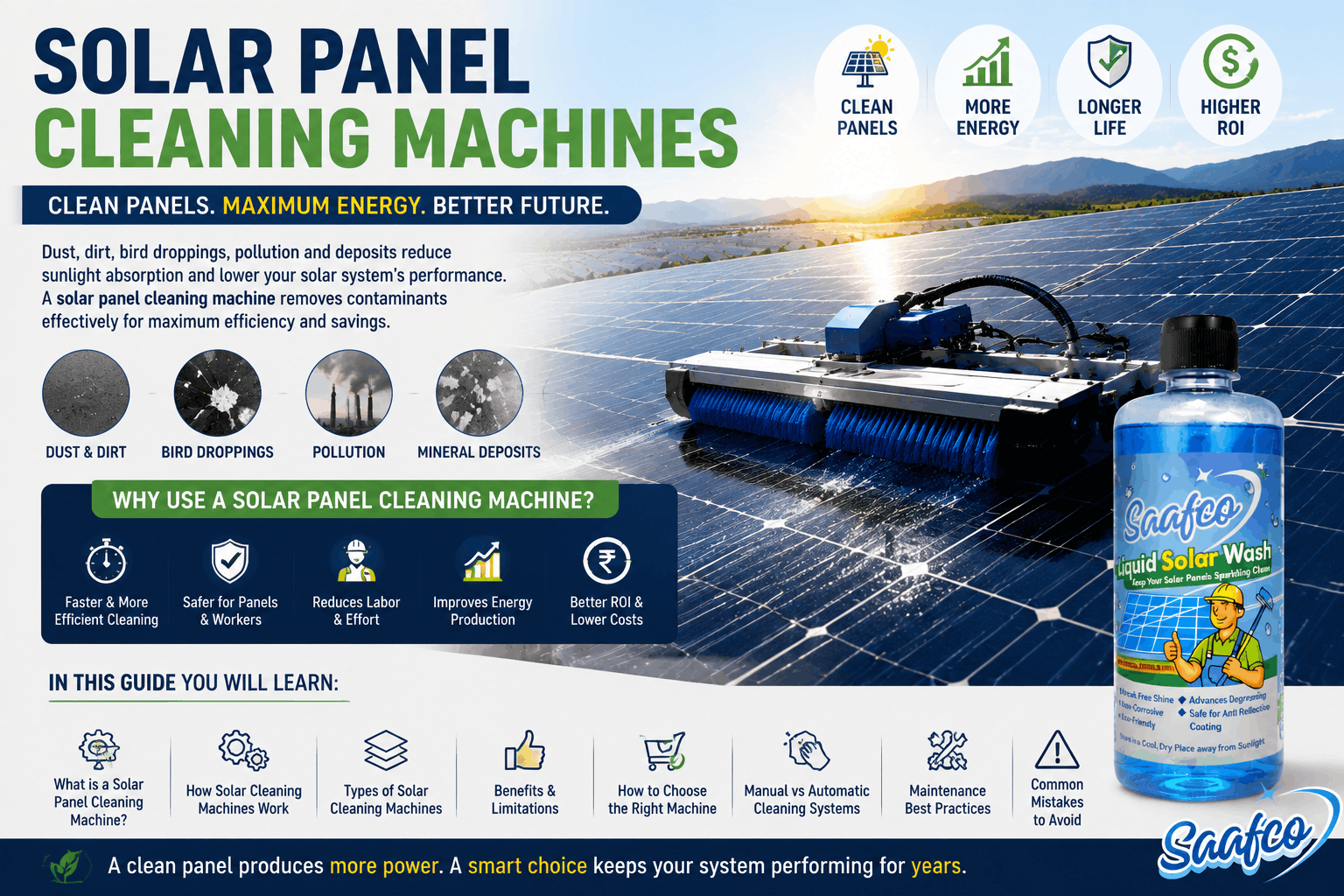
Unlike traditional manual cleaning methods, modern solar cleaning machines help remove contaminants faster, safer, and more efficiently while reducing labor requirements.
Whether you own a small rooftop solar system or manage a large commercial solar farm, choosing the right cleaning equipment can improve:
- Solar panel efficiency
- Energy production
- System lifespan
- Maintenance safety
- Long-term return on investment
This comprehensive guide explains everything you need to know about solar panel cleaning machines, including:
- What a solar panel cleaning machine is
- How solar cleaning machines work
- Different types available
- Benefits and limitations
- How to choose the right machine
- Manual vs automatic cleaning systems
- Maintenance best practices
- Common mistakes to avoid
What Is a Solar Panel Cleaning Machine?
A solar panel cleaning machine is specialized equipment designed to remove dust, dirt, debris, bird droppings, and other contaminants from photovoltaic panels without damaging their protective surfaces.
These machines use different technologies, including:
- Rotating soft brushes
- Water-fed cleaning systems
- Motorized cleaning heads
- Telescopic cleaning poles
- Robotic cleaning systems
- Automated solar maintenance equipment
The main purpose is to restore the panel surface so sunlight can reach photovoltaic cells more effectively.
A cleaner panel surface allows:
- Better light transmission
- Improved energy generation
- Reduced efficiency losses
- Longer equipment life
Why Solar Panel Cleaning Machines Are Becoming More Important
The growth of solar energy has created a greater need for efficient maintenance solutions.
According to global renewable energy reports, solar photovoltaic capacity has expanded rapidly over the last decade, making operation and maintenance (O&M) an increasingly important part of solar management.
Large solar installations can contain:
- Hundreds of panels
- Thousands of photovoltaic modules
- Extensive surface areas requiring maintenance
Cleaning such systems manually can become:
- Expensive
- Time-consuming
- Physically demanding
- Unsafe
Solar cleaning machines solve many of these challenges by improving cleaning speed and consistency.
How Dirty Solar Panels Affect Performance
Solar panels depend on sunlight reaching photovoltaic cells.
When contaminants accumulate, they create a barrier between sunlight and the solar cell surface.
Common contaminants include:
Dust and Sand
Especially common in:
- Dry climates
- Desert regions
- Agricultural areas
- Construction zones
Dust particles reduce sunlight penetration and may decrease electricity production.
Bird Droppings
Bird droppings are particularly problematic because they create concentrated shaded areas.
Unlike loose dust, they often:
- Stick to surfaces
- Resist normal rainfall
- Create difficult stains
Pollution and Industrial Residue
Urban and industrial areas expose solar panels to:
- Vehicle emissions
- Smoke particles
- Industrial dust
- Airborne chemicals
Mineral Deposits
Hard water can leave behind:
- Calcium deposits
- White stains
- Water marks
These reduce surface clarity over time.
Solar Panel Cleaning Machine vs Manual Cleaning
Traditional solar cleaning often involves:
- Buckets
- Cloths
- Manual brushes
- Ladders
While this method works for small installations, it becomes inefficient for larger systems.
Manual Cleaning Challenges
Manual cleaning can involve:
- High labor costs
- Increased safety risks
- Uneven cleaning results
- More physical effort
Machine Cleaning Advantages
Solar cleaning machines provide:
✓ Faster operation
✓ Reduced labor requirements
✓ Better cleaning consistency
✓ Improved worker safety
✓ Access to difficult areas
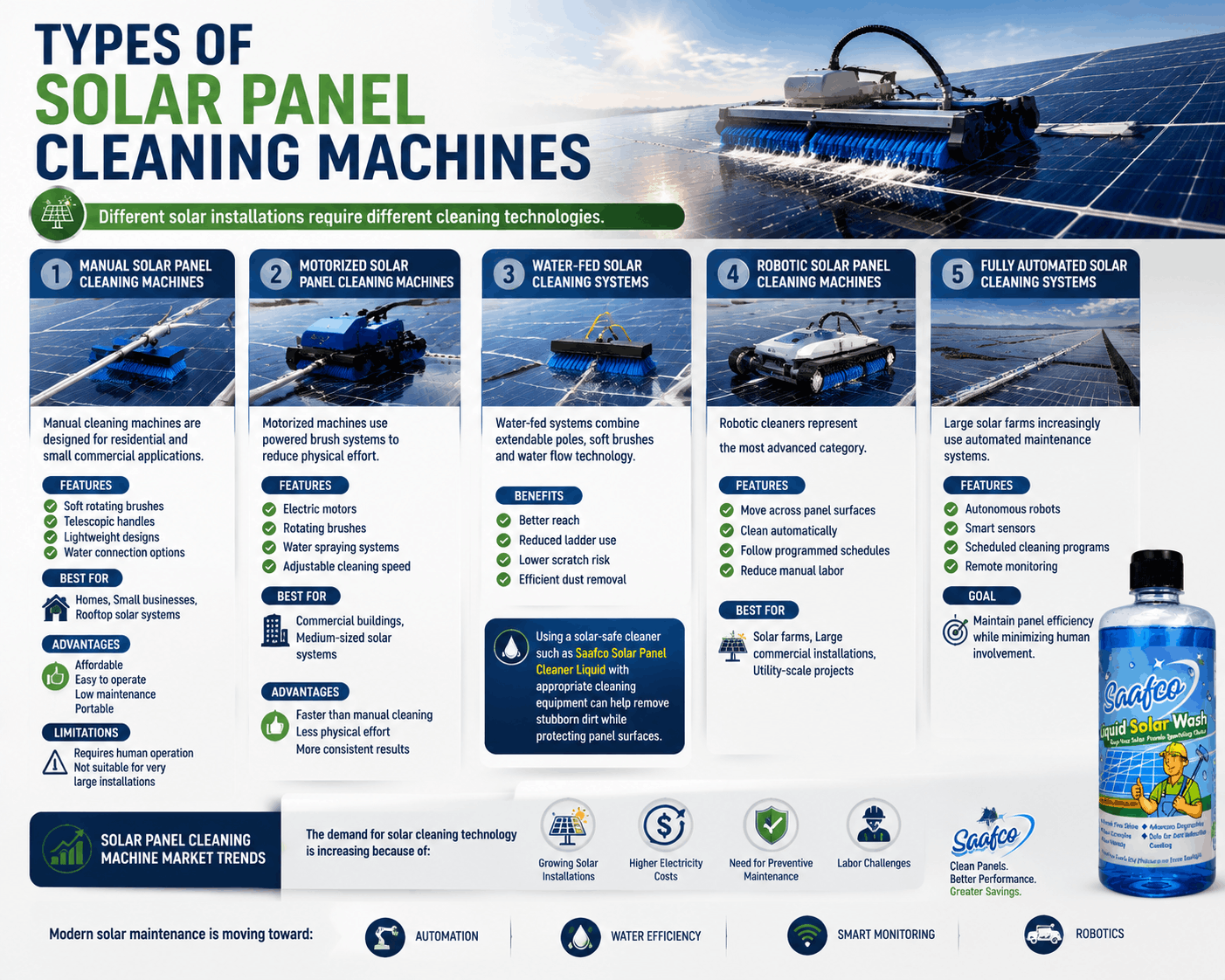
Types of Solar Panel Cleaning Machines
Different solar installations require different cleaning technologies.
1. Manual Solar Panel Cleaning Machines
Manual cleaning machines are designed for residential and small commercial applications.
They usually include:
- Soft rotating brushes
- Telescopic handles
- Lightweight designs
- Water connection options
Best For:
- Homes
- Small businesses
- Rooftop solar systems
Advantages:
- Affordable
- Easy to operate
- Low maintenance
- Portable
Limitations:
- Requires human operation
- Not suitable for very large installations
2. Motorized Solar Panel Cleaning Machines
Motorized machines use powered brush systems to reduce physical effort.
Features may include:
- Electric motors
- Rotating brushes
- Water spraying systems
- Adjustable cleaning speed
Best For:
- Commercial buildings
- Medium-sized solar systems
Advantages:
- Faster than manual cleaning
- Less physical effort
- More consistent results
3. Water-Fed Solar Cleaning Systems
Water-fed systems combine:
- Extendable poles
- Soft brushes
- Water flow technology
They are popular because they can clean panels without workers standing directly near the surface.
Benefits:
- Better reach
- Reduced ladder use
- Lower scratch risk
- Efficient dust removal
Using a solar-safe cleaner such as Saafco Solar Panel Cleaner Liquid with appropriate cleaning equipment can help remove stubborn dirt while protecting panel surfaces.
4. Robotic Solar Panel Cleaning Machines
Robotic cleaners represent the most advanced category.
These systems can:
- Move across panel surfaces
- Clean automatically
- Follow programmed schedules
- Reduce manual labor
They are mainly used in:
- Solar farms
- Large commercial installations
- Utility-scale projects
5. Fully Automated Solar Cleaning Systems
Large solar farms increasingly use automated maintenance systems.
These may include:
- Autonomous robots
- Smart sensors
- Scheduled cleaning programs
- Remote monitoring
The goal is to maintain panel efficiency while minimizing human involvement.
Solar Panel Cleaning Machine Market Trends
The demand for solar cleaning technology is increasing because of:
- Growing solar installations
- Higher electricity costs
- Need for preventive maintenance
- Labor challenges
- Expansion of utility-scale solar farms
Modern solar maintenance is moving toward:
- Automation
- Water efficiency
- Smart monitoring
- Robotics
Real-World Example
Consider two solar installations:
System A:
A small 5kW rooftop system on a residential house.
A lightweight telescopic cleaning machine may be sufficient because the owner only needs periodic maintenance.
System B:
A commercial solar farm containing thousands of panels.
Manual cleaning would require significant labor and downtime, making automated or motorized cleaning systems more practical.
The correct machine depends on:
- System size
- Location
- Cleaning frequency
- Budget
- Accessibility
Key Features to Look for in a Solar Panel Cleaning Machine
Choosing the right solar panel cleaning machine requires understanding your specific cleaning requirements. A machine suitable for a small residential rooftop system may not be practical for a large commercial solar installation.
Before purchasing cleaning equipment, consider the following important features.
1. Soft Brush Technology
The brush is one of the most important components of any solar cleaning machine.
Solar panels have protective glass surfaces and anti-reflective coatings that can be damaged by aggressive cleaning tools.
A good solar panel cleaning machine should have:
- Soft nylon bristles
- Scratch-resistant materials
- Gentle rotating action
- Even pressure distribution
Soft brushes effectively remove:
- Dust particles
- Sand
- Bird droppings
- Surface residue
without creating micro-scratches that can affect photovoltaic performance.
2. Adjustable Telescopic Handles
For residential rooftops, accessibility is often a major challenge.
Telescopic cleaning poles allow users to clean panels from safer positions without frequently climbing onto roofs.
Benefits include:
- Extended reach
- Reduced fall risk
- Easier rooftop maintenance
- Better cleaning angles
A quality telescopic system should be:
- Lightweight
- Strong
- Corrosion-resistant
- Easy to adjust
Aluminium poles are commonly preferred because they provide strength without excessive weight.
3. Water Flow Integration
Many modern solar cleaning machines include water-fed brush systems.
These systems combine:
- Controlled water flow
- Rotating brushes
- Cleaning solutions
to remove stubborn contamination.
Water integration helps remove:
- Dust layers
- Mud residue
- Mineral deposits
- Bird droppings
For better results, using a solar-safe cleaning liquid such as Saafco Solar Panel Cleaner Liquid can help clean surfaces effectively while reducing streak formation.
4. Lightweight and Ergonomic Design
A cleaning machine should be comfortable to use, especially for residential applications.
Important design factors include:
- Balanced weight distribution
- Comfortable handles
- Easy movement
- Reduced operator fatigue
Heavy equipment may become difficult to control and increase the risk of accidental panel damage.
5. Durable Construction Materials
Solar cleaning equipment is often exposed to:
- Sunlight
- Water
- Outdoor conditions
- Dust
Therefore, machines should use durable materials such as:
- Aluminium
- Stainless steel components
- Weather-resistant plastics
High-quality construction improves equipment lifespan and reduces maintenance costs.
6. Battery or Power Options
Motorized cleaning machines may operate using different power sources.
Common options include:
Battery-Powered Machines
Advantages:
- Portable
- No electrical cable required
- Easy rooftop operation
Best for:
- Homes
- Small commercial systems
Electric-Powered Machines
Advantages:
- Continuous operation
- Higher power output
Best for:
- Large installations
- Professional cleaning teams
How to Choose the Best Solar Panel Cleaning Machine
The best machine depends on your solar system size, location, and maintenance requirements.
For Residential Solar Panels
Homeowners usually need equipment that is:
- Affordable
- Easy to store
- Lightweight
- Simple to operate
Recommended features:
✓ Telescopic pole
✓ Soft brush head
✓ Water connection option
✓ Lightweight design
A manual or semi-automatic cleaning machine is usually sufficient for most household systems.
For Commercial Solar Installations
Businesses often require faster and more efficient solutions.
Recommended features:
✓ Motorized brush system
✓ Larger cleaning coverage
✓ Durable construction
✓ Reduced labor requirements
Commercial buildings with rooftop solar systems benefit from machines that reduce cleaning time while maintaining consistent results.
For Solar Farms
Large-scale solar farms require specialized maintenance solutions.
Solar farms may contain:
- Thousands of photovoltaic modules
- Large ground-mounted arrays
- Extensive cleaning areas
Suitable solutions include:
- Robotic cleaning systems
- Automated solar cleaners
- Industrial brush machines
These systems reduce labor costs and help maintain consistent energy production.
Manual vs Automatic Solar Panel Cleaning Machines
Understanding the difference between cleaning systems helps users choose the right option.
| Feature | Manual Cleaning Machine | Automatic Cleaning Machine |
| Cost | Lower investment | Higher investment |
| Operation | Requires human effort | Minimal human involvement |
| Best for | Homes and small systems | Commercial and solar farms |
| Speed | Moderate | Faster |
| Maintenance | Simple | More technical |
| Labor requirement | Higher | Lower |
| Cleaning consistency | Depends on operator | More consistent |
Are Automatic Solar Panel Cleaning Machines Worth It?
Automatic cleaning systems are usually more expensive, but they provide advantages for large solar installations.
They are valuable because they:
- Reduce manual labor
- Save cleaning time
- Improve maintenance scheduling
- Provide consistent cleaning quality
For a homeowner with a small rooftop system, an expensive robotic cleaner may not be necessary.
However, for a solar farm producing thousands of kilowatt-hours daily, automation can significantly improve operational efficiency.
Solar Panel Cleaning Machine Price Factors
The cost of a solar panel cleaning machine depends on several factors.
Machine Type
Basic manual machines are generally more affordable, while robotic systems require a larger investment.
Cleaning Capacity
Machines designed to clean larger areas usually cost more because they include:
- Stronger motors
- Larger brushes
- Advanced controls
Automation Level
Price increases with additional features such as:
- Remote operation
- Automatic scheduling
- Smart sensors
- Robotic movement
Build Quality
Equipment made with durable materials usually has a higher upfront cost but provides better long-term value.
Common Mistakes When Using Solar Panel Cleaning Machines
Even advanced cleaning equipment can cause damage if used incorrectly.
1. Using Hard Brushes
Hard bristles may scratch:
- Glass surfaces
- Protective coatings
- Anti-reflective layers
Always use soft solar-compatible brushes.
2. Applying Excessive Pressure
Too much pressure can:
- Damage panel surfaces
- Stress mounting systems
- Create unnecessary wear
The machine should clean effectively with gentle contact.
3. Using Incorrect Cleaning Chemicals
Some household cleaners contain chemicals that may damage solar panels.
Avoid:
- Strong acids
- Abrasive cleaners
- Harsh chemicals
A dedicated solar cleaning solution is safer for photovoltaic modules.
4. Cleaning Hot Panels
Solar panels can become extremely hot during direct sunlight.
Cleaning hot panels may cause:
- Rapid water evaporation
- Streak marks
- Thermal stress
The best cleaning times are usually:
- Early morning
- Late afternoon
When panels are cooler.
5. Ignoring Electrical Safety
Solar panels generate electricity whenever exposed to sunlight.
Before cleaning:
- Follow manufacturer instructions
- Switch off the system where possible
- Avoid damaged cables
- Use proper protective equipment
Solar Panel Cleaning Machine Safety Guidelines
Safety should always be a priority when maintaining solar systems.
Rooftop Safety
Before cleaning rooftop panels:
- Check roof stability
- Use secure ladders
- Wear appropriate footwear
- Avoid wet surfaces
Electrical Safety
Keep cleaning equipment away from:
- Exposed wiring
- Damaged connectors
- Electrical components
Water should never enter electrical connections.
Equipment Safety
Regularly inspect the machine for:
- Damaged brushes
- Loose parts
- Worn cables
- Battery problems
Proper equipment maintenance improves safety and performance.
Solar Panel Cleaning Machine Maintenance
Like solar panels themselves, cleaning machines also require maintenance.
Regularly check:
Brushes
Replace worn brushes to maintain effective cleaning.
Water System
Inspect:
- Pipes
- Connectors
- Filters
to prevent blockages.
Battery and Electrical Components
For powered machines:
- Charge batteries properly
- Store equipment safely
- Protect components from moisture
Best Practices for Solar Panel Cleaning in Pakistan
Pakistan’s climate creates unique cleaning challenges.
Many regions experience:
- Dust storms
- Dry weather
- Agricultural particles
- Urban pollution
Cities such as Karachi, Lahore, Multan, Faisalabad, and Islamabad may require different cleaning schedules depending on local conditions.
Recommended practices:
✓ Inspect panels every few months
✓ Clean after dust storms
✓ Use soft brushes
✓ Avoid harsh chemicals
✓ Monitor electricity production
✓ Maintain surrounding areas
Combining proper equipment with a safe cleaner such as Saafco Solar Panel Cleaner Liquid helps maintain clean, efficient photovoltaic surfaces.
DIY Cleaning Machine Use vs Professional Solar Cleaning Services
When DIY Machine Cleaning Works
DIY cleaning is suitable when:
- Panels are easily accessible
- The system is small
- Safety risks are low
Homeowners can maintain performance using:
- Telescopic cleaning machines
- Soft brushes
- Solar-safe cleaning solutions
When Professional Cleaning Is Better
Professional services are recommended for:
- Large commercial systems
- High-rise buildings
- Solar farms
- Difficult rooftop installations
Professionals use:
- Advanced cleaning equipment
- Safety systems
- Specialized maintenance methods
This reduces risks and ensures consistent results.
Solar Panel Cleaning Machine Maintenance Checklist
Use this checklist for effective solar maintenance:
✓ Choose the correct machine type
✓ Use soft solar-compatible brushes
✓ Inspect equipment before use
✓ Clean panels during cooler hours
✓ Avoid excessive pressure
✓ Use safe cleaning solutions
✓ Check panels after storms
✓ Monitor energy output after cleaning
✓ Maintain cleaning equipment regularly
The Future of Solar Panel Cleaning Machines
The solar energy industry is rapidly evolving, and solar maintenance technology is becoming smarter, faster, and more efficient.
As solar installations continue to expand worldwide, traditional manual cleaning methods are increasingly being replaced by advanced cleaning systems that reduce labor, save water, and improve maintenance accuracy.
The future of solar panel cleaning is moving toward:
- Automation
- Robotics
- Artificial intelligence
- Smart monitoring
- Water-efficient technologies
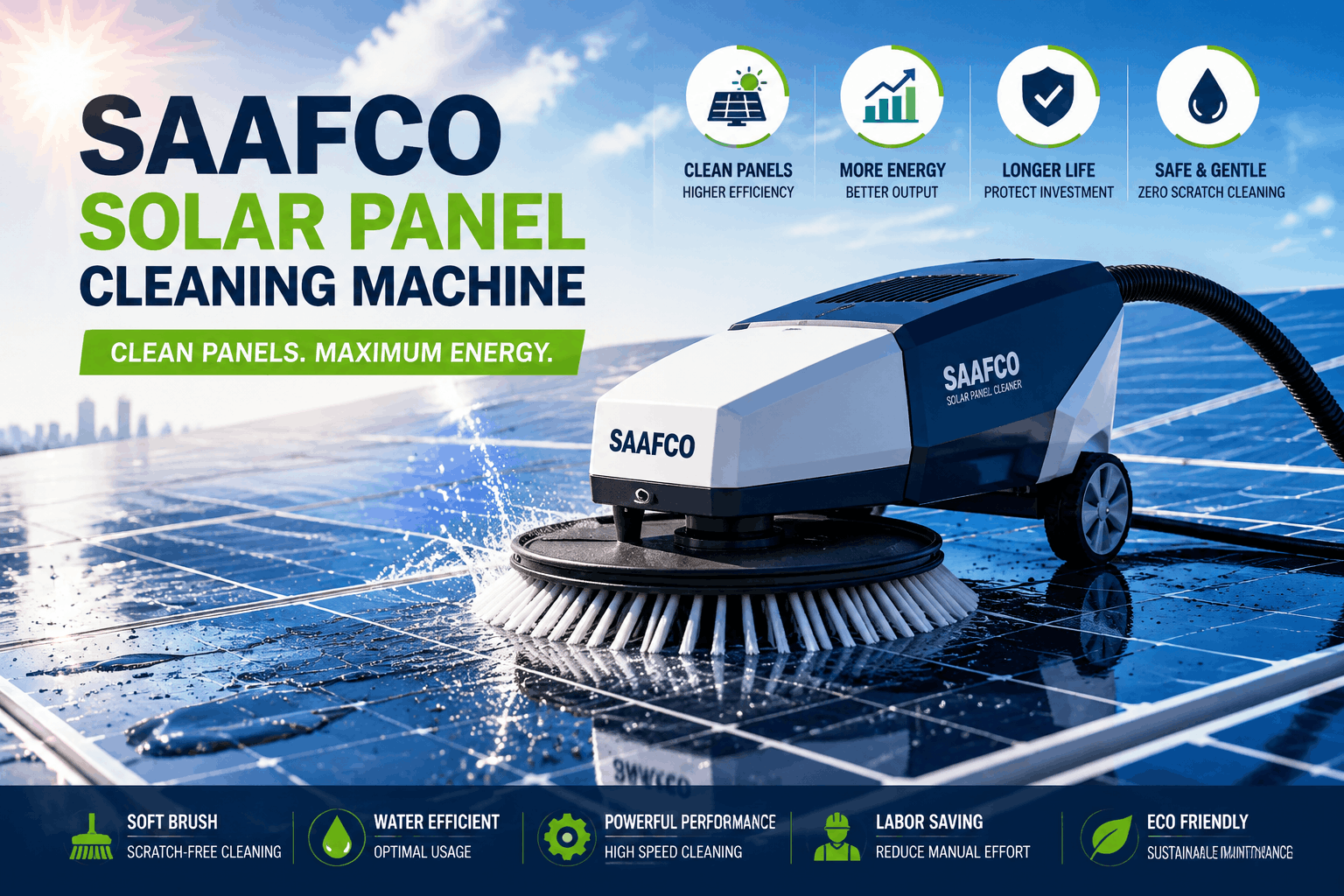
1. Robotic Solar Panel Cleaning Systems
Robotic solar cleaners are among the most advanced developments in photovoltaic maintenance.
These machines are designed to move across solar panels and remove dust automatically without requiring constant human operation.
Robotic systems typically use:
- Motorized wheels
- Soft rotating brushes
- Sensors
- Smart navigation systems
- Automated scheduling
Benefits of Robotic Solar Cleaners
Reduced Labor Requirements
Large solar farms contain thousands of panels, making manual cleaning expensive and time-consuming.
Robotic cleaners reduce the need for continuous human involvement.
Consistent Cleaning Performance
Manual cleaning quality can vary depending on the worker.
Robotic systems provide:
- Uniform cleaning pressure
- Consistent movement
- Scheduled operation
Improved Safety
Solar maintenance often involves:
- High rooftops
- Large installations
- Electrical risks
Automation reduces worker exposure to dangerous conditions.
2. Artificial Intelligence in Solar Maintenance
Artificial intelligence is becoming an important part of modern solar operations.
Smart solar systems can analyze:
- Energy production patterns
- Weather conditions
- Dust accumulation trends
- Cleaning requirements
AI-based monitoring can help determine:
“When does this solar system actually need cleaning?”
Instead of following fixed schedules, future systems may clean panels only when performance drops.
3. Smart Sensor-Based Cleaning Systems
Advanced solar cleaning systems may use sensors to detect:
- Dust levels
- Surface contamination
- Energy losses
- Weather conditions
These technologies help optimize maintenance by avoiding unnecessary cleaning.
Benefits include:
- Reduced water usage
- Lower operating costs
- Better energy management
4. Water-Efficient Solar Cleaning Technology
Water conservation is becoming increasingly important, especially in dry regions.
Modern cleaning solutions focus on:
- Low-water cleaning systems
- Water recycling
- Dry cleaning technology
- Efficient brush systems
This is especially valuable in regions where water availability is limited.
Solar Panel Cleaning Machine Selection Guide
Before purchasing a machine, users should evaluate their specific needs.
For Homeowners
A residential user should prioritize:
- Affordable equipment
- Lightweight design
- Easy operation
- Safe rooftop access
Recommended choice:
Manual or semi-automatic cleaning machine
Ideal features:
✓ Telescopic handle
✓ Soft brush head
✓ Water connection option
✓ Easy storage
For Businesses
Commercial users should focus on:
- Cleaning speed
- Durability
- Reduced labor requirements
Recommended choice:
Motorized cleaning equipment
Suitable for:
- Office buildings
- Warehouses
- Factories
- Commercial rooftops
For Solar Farms
Utility-scale solar projects require advanced solutions.
Recommended choice:
Robotic or automated cleaning systems
Important features:
- Autonomous operation
- Large coverage capability
- Remote monitoring
- Scheduled cleaning
Expert Solar Panel Maintenance Strategy
A solar cleaning machine is only one part of effective solar maintenance.
A complete maintenance strategy includes:
1. Regular Performance Monitoring
Solar owners should monitor:
- Daily energy production
- Monthly output trends
- Sudden performance drops
Monitoring helps identify:
- Dirty panels
- Shading issues
- Equipment problems
2. Scheduled Cleaning
A proper cleaning schedule depends on:
- Location
- Weather conditions
- Dust levels
- Panel installation type
General recommendations:
Residential Systems
Clean every:
1–2 months
Dusty or Polluted Areas
Clean more frequently:
Every month
Commercial Solar Installations
Follow:
Quarterly maintenance schedules
3. Combine Cleaning With Inspection
Cleaning is an opportunity to inspect the entire solar system.
Check for:
- Cracked panels
- Loose connections
- Damaged frames
- Shading problems
- Corrosion
Early detection prevents expensive repairs.
4. Use the Correct Cleaning Solution
A cleaning machine alone may not remove all contamination.
For better results, combine equipment with a solar-safe cleaning solution.
A suitable solar cleaner should:
- Remove dirt effectively
- Protect glass surfaces
- Avoid residue buildup
- Maintain panel clarity
Saafco Solar Panel Cleaner Liquid can be used with appropriate cleaning equipment to help remove dust, stains, and residues while maintaining a clean surface.
Complete Solar Panel Cleaning Machine Maintenance Checklist
Use this checklist to maximize equipment performance:
✓ Choose the correct machine for your system size
✓ Inspect brushes before cleaning
✓ Replace worn cleaning components
✓ Avoid abrasive materials (Use Professional Solar Cleaner)
✓ Clean panels during cooler hours
✓ Check water quality before use
✓ Avoid excessive pressure
✓ Follow electrical safety procedures
✓ Store equipment properly after use
✓ Monitor solar output after cleaning
Frequently Asked Questions (FAQ)
What is a solar panel cleaning machine?
A solar panel cleaning machine is specialized equipment designed to remove dust, dirt, bird droppings, and other contaminants from photovoltaic panels using brushes, water systems, or automated technology.
Are solar panel cleaning machines better than manual cleaning?
For large installations, cleaning machines are usually more efficient because they reduce labor, improve consistency, and save time. For small residential systems, manual machines may be sufficient.
How often should I use a solar panel cleaning machine?
Most solar systems require cleaning every 1–2 months. However, dusty locations, industrial areas, and agricultural regions may require more frequent cleaning.
Can a solar cleaning machine damage panels?
A properly designed machine with soft brushes should not damage panels. Problems usually occur when users apply excessive pressure or use unsuitable cleaning materials.
Are robotic solar cleaning machines worth the investment?
Robotic systems are highly valuable for large solar farms because they reduce labor costs and provide consistent maintenance. They may not be necessary for small residential systems.
Can I use normal detergent with a solar panel cleaning machine?
Regular household detergents may contain chemicals that can affect panel surfaces. A solar-specific cleaning solution is generally safer.
What type of brush is best for solar panels?
Soft nylon or microfiber-based brushes are recommended because they remove dirt without scratching glass surfaces.
Is high-pressure water safe for solar panels?
High-pressure water is generally not recommended because it may damage seals, connectors, and sensitive components.
What is the safest way to clean rooftop solar panels?
The safest approach is:
- Turn off the system according to manufacturer instructions
- Use soft cleaning equipment
- Avoid walking on panels
- Use proper safety equipment
- Apply suitable cleaning solutions
Solar Panel Cleaning Machine: Final Buying Recommendation
Choosing the right solar panel cleaning machine depends on your:
- Solar system size
- Budget
- Cleaning frequency
- Installation location
- Safety requirements
For homeowners, a lightweight machine with a soft brush and telescopic handle is usually the most practical choice.
For businesses, motorized cleaning systems provide better efficiency and reduce maintenance time.
For solar farms, robotic and automated systems offer the best long-term value by reducing labor requirements and improving cleaning consistency.
Conclusion
Solar panel cleaning machines have become an essential part of modern solar maintenance. As solar installations continue expanding, efficient cleaning solutions are becoming increasingly important for maintaining energy production and protecting valuable photovoltaic systems.
Dust, pollution, bird droppings, and environmental contamination can reduce solar performance over time. Using the right cleaning equipment helps restore panel efficiency while reducing labor effort and improving safety.
Whether you choose a manual cleaning machine for a home system, a motorized solution for a business, or an automated robotic cleaner for a solar farm, the goal remains the same:
Keep solar panels clean, efficient, and capable of producing maximum renewable energy.
Combining reliable cleaning equipment with safe products such as Saafco Solar Panel Cleaner Liquid helps maintain clear panel surfaces, reduce performance losses, and extend the useful life of your solar investment.
Regular maintenance is not just a cleaning task — it is a long-term strategy for protecting your solar energy system and maximizing its financial benefits.