 Skip to content

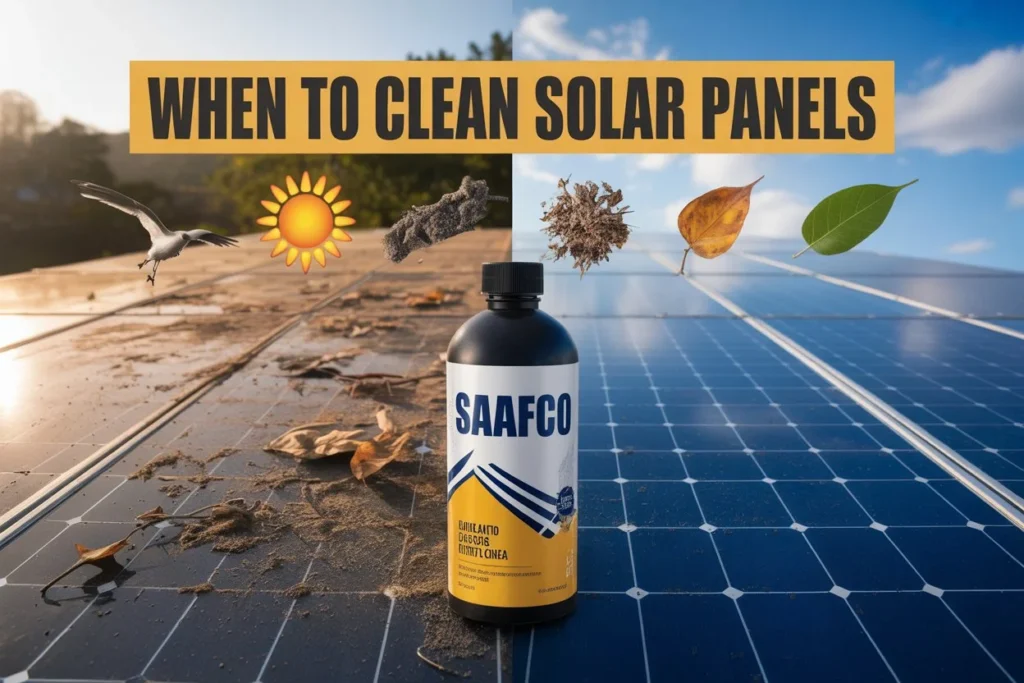
Keeping solar panels clean is essential for maintaining efficiency, extending lifespan, and protecting your investment. Dust, dirt, and bird droppings can significantly reduce energy output, while improper cleaning can cause scratches or corrosion. In this guide, we’ll explore the best cleaning schedules, signs of dirty panels, and practical advice for Pakistan, with natural promotion of trusted Saafco products.
Why Timing Matters for Solar Panel Cleaning
Maintaining Optimal Energy Output
Dust, dirt, and bird droppings block sunlight, reducing electricity generation. Regular cleaning intervals are vital for maintaining maximum energy output. Combining proper timing with safe solutions like Saafco Solar Panel Cleaner Liquid ensures your panels remain efficient and streak-free.
Protecting Panel Lifespan
Accumulated debris can cause long-term damage to solar panels. Improper cleaning may also scratch or corrode surfaces. Using a solar panel-safe liquid like Saafco Solar Panel Cleaner Liquid along with soft brushes protects your panels for years.
Cost-Effective Maintenance
Regularly cleaning your panels reduces repair costs and ensures long-term energy efficiency. Even small maintenance steps, such as wiping nearby surfaces with Saafco Anti-Bacterial Liquid Dish Wash or Saafco Liquid Dish Wash, help maintain the overall environment of your solar installation.
Signs Your Solar Panels Need Cleaning
Visible Dust and Debris
In Pakistan, sand, leaves, and urban pollution often accumulate on panels. Panels located in dusty cities like Karachi or Lahore need regular inspection.
Reduced Energy Output
Monitoring energy production is a good indicator. Any noticeable drop may suggest dirt buildup, which should be cleaned promptly.
Stains and Water Marks
Mineral streaks from rainwater or bird droppings can affect panel performance. Using Saafco Solar Panel Cleaner Liquid can help remove these safely.
Lingering Odors or Residues
Environmental deposits around panels may indicate surface dirt or mold accumulation. Light cleaning with Saafco Anti-Bacterial Liquid Dish Wash ensures hygiene without damaging panels.
Factors Affecting Cleaning Frequency
Geographic Location
Dusty and polluted cities like Karachi and Lahore or desert areas with sand accumulation require more frequent cleaning.
Seasonal Variations
Panels need different care during rainy and dry seasons. After storms or dust storms, extra cleaning may be necessary to maintain efficiency.
Panel Angle and Placement
Flat rooftops tend to collect more dust, while tilted panels naturally shed debris. Shaded areas may accumulate leaves or moisture more quickly.
Type of Solar Panels
Residential, commercial, and large-scale solar farms have varying cleaning needs. Material differences, such as glass vs polymer coatings, also affect cleaning methods.
Recommended Cleaning Schedule for Pakistan
Residential Panels
Clean every 3–6 months, depending on local dust and pollution levels.
Commercial Panels
Large installations may require quarterly cleaning or automated systems for efficiency.
After Extreme Weather
Always inspect and clean panels after heavy rain, dust storms, or storms to prevent damage and maintain output.
Combining with Eco-Friendly Cleaning Solutions
Using Saafco Solar Panel Cleaner Liquid ensures streak-free, safe, and eco-friendly cleaning for all types of panels.
Best Practices for Cleaning Solar Panels
Safety Precautions
Turn off panels, secure ladders, and wear protective gear before cleaning. Safety should always be a priority.
Tools and Machines
Soft brushes, water-integrated cleaning machines, and mild detergents work best. Trusted products like Saafco Solar Panel Cleaner Liquid offer effective cleaning without harming panels. For surrounding areas, Saafco Anti-Bacterial Liquid Dish Wash or Saafco Liquid Dish Wash can be used safely.
Avoiding Common Mistakes
Do not use abrasive materials, harsh chemicals, or high-pressure water directly on panels, as this may cause damage.
DIY vs Professional Solar Panel Cleaning
When to Clean at Home
Small rooftops and easily accessible panels can be cleaned at home using soft brushes and Saafco products for safe, effective maintenance.
Benefits of Hiring Professionals
Large or hard-to-reach installations require professionals who use specialized machines and eco-friendly liquids. Professional cleaning ensures consistent results and reduces safety risks.
Tips to Maintain Clean Solar Panels
- Inspect panels regularly for dust and debris.
- Schedule cleaning according to local environment and seasonal conditions.
- Combine cleaning with Saafco Solar Panel Cleaner Liquid for safe, streak-free results.
- Lightly clean surrounding areas with Saafco Anti-Bacterial Liquid Dish Wash or Saafco Liquid Dish Wash.
- Protect panels from scratches using soft brushes and microfiber cloths.
Frequently Asked Questions (FAQ)
How often should I clean my solar panels in Pakistan?
Every 3–6 months, or more often in dusty or polluted areas.
Can I clean panels after rain?
Yes, but ensure panels are dry and safe to touch. Using Saafco products is recommended.
Is it safe to use household detergents?
Mild detergents can work, but Saafco Solar Panel Cleaner Liquid is safer and more effective.
Can Saafco Solar Panel Cleaner Liquid be used on all types of panels?
Yes, it is safe for glass, polymer, residential, and commercial panels.
Conclusion
Cleaning solar panels at the right time is crucial for maintaining maximum efficiency, protecting lifespan, and saving on repair costs. Using the right tools and trusted products, such as Saafco Solar Panel Cleaner Liquid, Saafco Anti-Bacterial Liquid Dish Wash, and Saafco Liquid Dish Wash ensures safe, effective, and eco-friendly results. Regular inspection and maintenance will keep your solar panels producing clean energy efficiently for years to come.