 Skip to content

Solar panels work best when they are clean. Dust, sand, bird drops, and pollution reduce the amount of sunlight that reaches the panel surface. This can decrease efficiency and waste energy. In Pakistan, where dust and heat are common, keeping your panels clean is very important.
That is why a professional solar panel washing service is the best way to protect your investment and keep your system running at full performance.
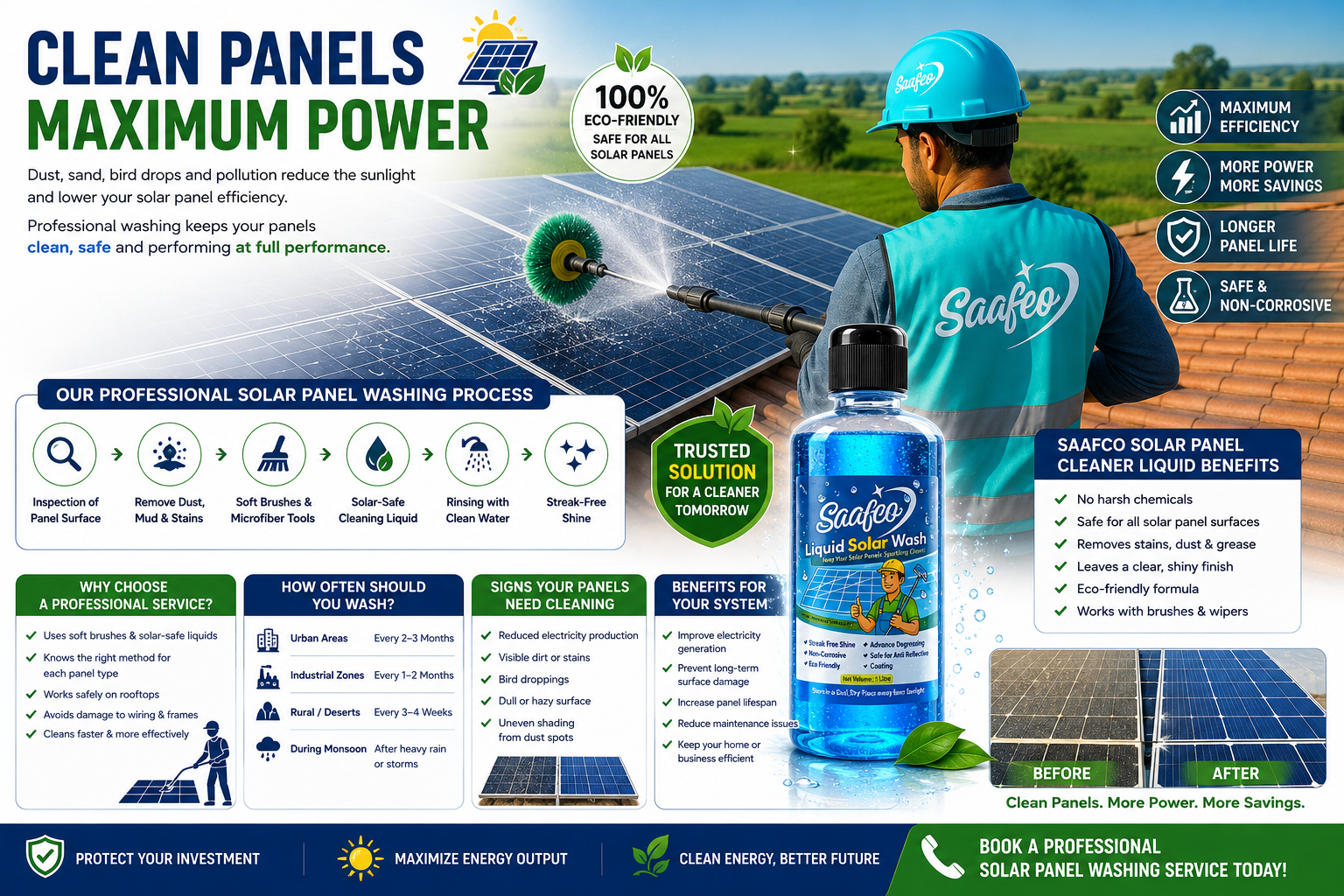
Why Solar Panel Washing Is Important
Over time, dirt builds up on the surface of solar panels. This layer blocks sunlight and lowers energy production. Regular washing helps:
- Improve electricity generation
- Prevent long-term surface damage
- Increase panel lifespan
- Reduce system maintenance issues
- Keep your home or business efficient
Even a small layer of dust can reduce power by 10–20%. In some areas, it can be even higher. With professional cleaning, your panels stay clear and work smoothly.
Consider a commercial warehouse operating a 100 kW rooftop solar system.
After several months without cleaning, dust and pollution accumulate across the module surfaces. Although the panels continue producing electricity, daily output gradually declines.
Following a professional inspection and cleaning using soft brushes, purified water, and a solar-safe cleaning solution such as Saafco Solar Panel Cleaner Liquid, the system returns much closer to its expected production level. Similar improvements have been documented in field studies where cleaning restored measurable energy output after significant soiling.
What a Professional Solar Panel Washing Service Includes
A good cleaning service uses the right tools, safe techniques, and proper chemical-free solutions. At Saafco, we recommend using Solar Panel Cleaner Liquid, which is specially designed for safe and effective cleaning.
Most washing services include:
- Inspection of the panel surface
- Removal of dust, mud, bird droppings, and stains
- Washing with soft brushes or microfiber tools
- Use of solar-safe cleaning liquid
- Rinsing with clean water
- Ensuring no scratches or marks
- Quick-dry and streak-free shine
This process helps maintain the original clarity of the glass so the panels receive maximum sunlight.
Professional Inspection: More Than Just Cleaning
Professional solar panel washing is about much more than removing visible dirt. Experienced technicians inspect the entire photovoltaic (PV) system before cleaning to identify issues that may reduce performance or lead to expensive repairs.
A comprehensive inspection typically includes:
- Panel glass condition
- Aluminium frame integrity
- Mounting brackets and fasteners
- DC wiring and cable insulation
- Junction boxes
- Connectors and grounding points
- Signs of corrosion
- Water ingress
- Microcracks
- Delamination
- Potential hotspots
Professional technicians inspect the panel frame, wiring, mounting brackets, and glass before cleaning. This helps identify cracks, loose fittings, or hotspots that may affect system performance. Detecting these issues early allows homeowners and businesses to schedule maintenance before minor defects develop into costly failures.
According to researchers at the U.S. National Renewable Energy Laboratory (NREL), soiling is one of the most significant operational losses affecting photovoltaic systems worldwide, making routine inspection and cleaning an essential part of preventive maintenance.
How Dirt Affects Solar Panel Performance
Many people assume that dust simply makes solar panels look dirty. In reality, accumulated dust, pollen, pollution, bird droppings, and industrial particles reduce the amount of sunlight reaching the photovoltaic cells.
When sunlight is blocked, panels generate less electricity, forcing homeowners and businesses to rely more heavily on grid power.
Research published by the National Renewable Energy Laboratory (NREL) shows that even moderate soiling can result in measurable energy losses, while locations with heavy dust accumulation may experience significantly greater reductions if panels are not cleaned regularly.
In Pakistan, where dry weather, construction dust, agricultural activity, and airborne sand are common, regular cleaning is especially important for maintaining optimal energy production.
Why Rain Is Not Enough
One of the biggest misconceptions about solar maintenance is that rainfall automatically cleans solar panels.
Although rain removes loose dust, it often leaves behind:
- Bird droppings
- Sticky pollen
- Mud residue
- Air pollution deposits
- Grease
- Mineral stains
- Tree sap
Researchers at NREL found that rainfall alone was insufficient to restore panel performance in systems affected by pollen buildup. During peak pollen season, performance losses reached as much as 15%, and annual production losses of around 10% were observed where panels were not manually cleaned. Mechanical cleaning restored performance gains of approximately 5–11%.
This demonstrates why scheduled professional cleaning remains an important part of solar system maintenance, even in regions that receive seasonal rainfall.
Best Practices for Cleaning Solar Panels
Industry professionals recommend following these practices:
- Clean panels during early morning or late afternoon when glass temperatures are lower.
- Use soft microfiber brushes or non-abrasive tools.
- Avoid high-pressure washers unless specifically approved by the manufacturer.
- Never use abrasive powders or harsh household detergents.
- Use a dedicated solar panel cleaning solution designed to leave no residue.
- Inspect wiring, mounting hardware, and glass during every cleaning visit.
- Record cleaning dates and monitor energy production to determine the optimal maintenance schedule.
These practices help maintain efficiency while minimizing the risk of scratches, thermal stress, or damage to protective glass coatings.
Why Choose a Professional Service Instead of Cleaning Yourself?
Cleaning solar panels may look easy, but doing it incorrectly can cause damage. Hard brushes, detergents, or harsh chemicals can scratch or discolour the panel surface.
A professional washing service:
- Uses soft brushes and solar-safe liquids
- Knows the right method for each panel type
- Works safely on rooftops
- Avoids damage to wiring and frames
- Cleans faster and more effectively
This ensures your solar system stays safe while giving you the best performance.
Saafco’s Solar Panel Cleaner Liquid – A Trusted Cleaning Solution
For the best results, Saafco’s Solar Panel Cleaner Liquid is widely used in Pakistan by homeowners and commercial installers. It removes tough dirt without leaving marks or streaks.
Key benefits:
- No harsh chemicals
- Safe for all solar panel surfaces
- Removes stains, dust, and grease
- Leaves a clear, shiny finish
- Eco-friendly formula
- Works with brushes and wipers
Using the right cleaning liquid helps avoid scratches and keeps the panel glass as clear as new.
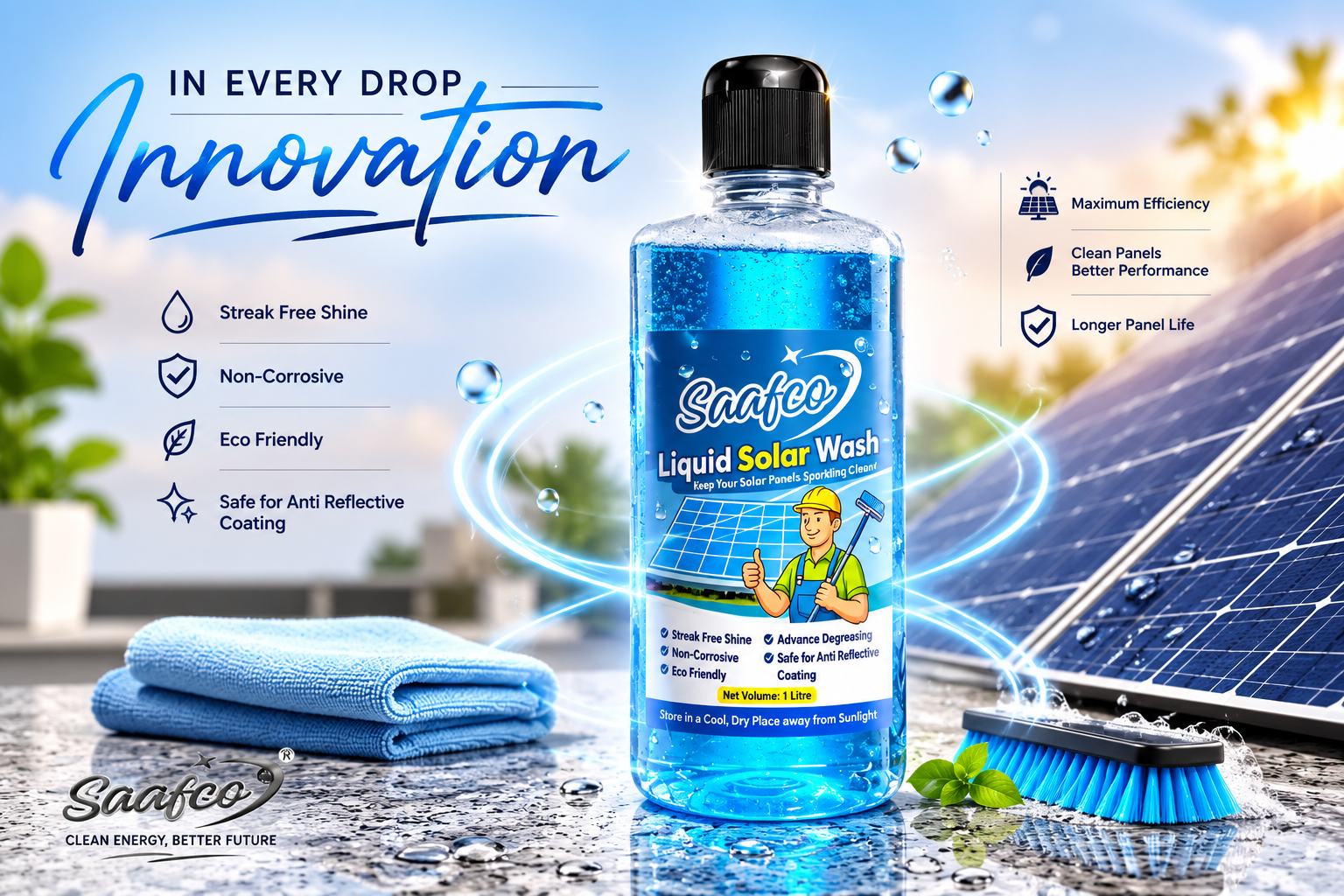
How Often Should You Wash Solar Panels?
In Pakistan’s dusty environment, cleaning frequency depends on your location:
- Urban areas: Every month
- Industrial zones: Every 1–2 months
- Rural areas or deserts: Every 3–4 weeks
- During monsoon: After heavy rain or storms
Regular maintenance ensures consistent energy output throughout the year.
“Soiling is one of the largest operational challenges affecting photovoltaic energy production worldwide. Even relatively small annual losses can translate into significant reductions in electricity generation and financial returns.”
— National Renewable Energy Laboratory (NREL) research on photovoltaic soiling
Signs Your Solar Panels Need Cleaning
You may need a washing service if you notice:
- Reduced electricity production
- Visible dirt or stains
- Bird droppings
- Dull or hazy panel surface
- Uneven shading from dust spots
Getting the panels professionally washed restores clarity and improves the power output instantly.
Benefits of Using Saafco Products for Washing Services
Cleaning companies prefer Saafco because our products are:
- Safe for glass and aluminium frames
- Powerful against stubborn dirt
- Affordable and long-lasting
- Made for Pakistan’s environment
- Easy to use for both homes and businesses
If you offer solar panel washing as a service, using Saafco products gives your customers better results and higher satisfaction.
Conclusion
A regular solar panel washing service is essential to keep your system efficient, clean, and long-lasting. With trusted cleaning solutions like Saafco Solar Panel Cleaner Liquid, you get superior shine and maximum energy output without damaging the panels.
Clean panels mean more power — and more savings.
FAQs
1. Why is solar panel washing important?
Solar panel washing is important because dust, sand, and bird droppings block sunlight and reduce power production. Clean panels work better and last longer.
2. How often should I wash my solar panels in Pakistan?
In Pakistan’s dusty climate, solar panels should be washed every 1–3 months, depending on your area. Industrial or roadside locations may need more frequent cleaning.
3. Can I wash solar panels myself?
Yes, but only with safe tools and solar-friendly cleaning liquid. Avoid detergents or hard brushes because they can damage the glass surface. A professional service is always safer.
4. What is the safest product for solar panel cleaning?
Saafco Solar Panel Cleaner Liquid is one of the safest and most effective products. It removes dirt without scratching and leaves a streak-free shine.
5. Does washing solar panels increase efficiency?
Yes. Clean panels absorb more sunlight. Regular washing can improve performance by 10–25%, depending on how dirty the panels are.
6. Will rain clean my solar panels naturally?
Rain removes loose dust, but it does not clean stains, bird droppings, or sticky dirt. Professional cleaning is still needed for proper maintenance.
7. Is solar panel washing safe for rooftop installations?
Yes, when done by trained professionals using soft brushes, wipers, and safe cleaning liquids. They ensure no damage to wiring or the panel structure.
8. Does professional cleaning improve ROI?
Yes. Solar panels represent a long-term investment, and maintaining their cleanliness helps maximize energy generation throughout their service life. Even modest efficiency improvements can translate into meaningful electricity savings over many years, especially for larger residential or commercial installations.