 Skip to content

Introduction – Why Oil Stains Are a Problem for Marble Surfaces
Marble is one of the most elegant materials used in homes across Pakistan — from kitchen countertops and dining tables to bathroom floors and decorative tiles. However, this luxurious stone has one big weakness: it’s porous, which means it can absorb oil stains quickly.
Common culprits include cooking oil, motor oil, beauty oils, and food spills. When oil seeps into marble, it leaves behind dark spots that dull the surface’s natural shine and beauty. Over time, these oil stains can even cause permanent discoloration if not treated properly.
Whether it’s your kitchen counter or a marble floor, knowing how to remove oil stains from marble effectively can help you restore its shine and elegance without professional help.
Understanding Oil Stains on Marble
Oil stains are particularly tricky because natural marble is highly porous, allowing liquids to seep deep into its surface. Once oil penetrates these tiny stone pores, it becomes difficult to remove with regular cleaning.
There are two main types of oil stains you’ll encounter:
- Surface-level stains – Fresh oil marks that haven’t seeped deep and can be cleaned quickly.
- Deep-set oil stains – Old or untreated marks that require stronger, time-based cleaning methods.
Additionally, the type of marble finish affects how easily stains can be cleaned.
- Polished marble repels oil better but still absorbs over time.
- Honed or matte finishes are more absorbent, making oil stains more visible.
Understanding these factors helps in choosing the right cleaning method — whether it’s a simple wipe-down or a deep-cleaning poultice treatment.
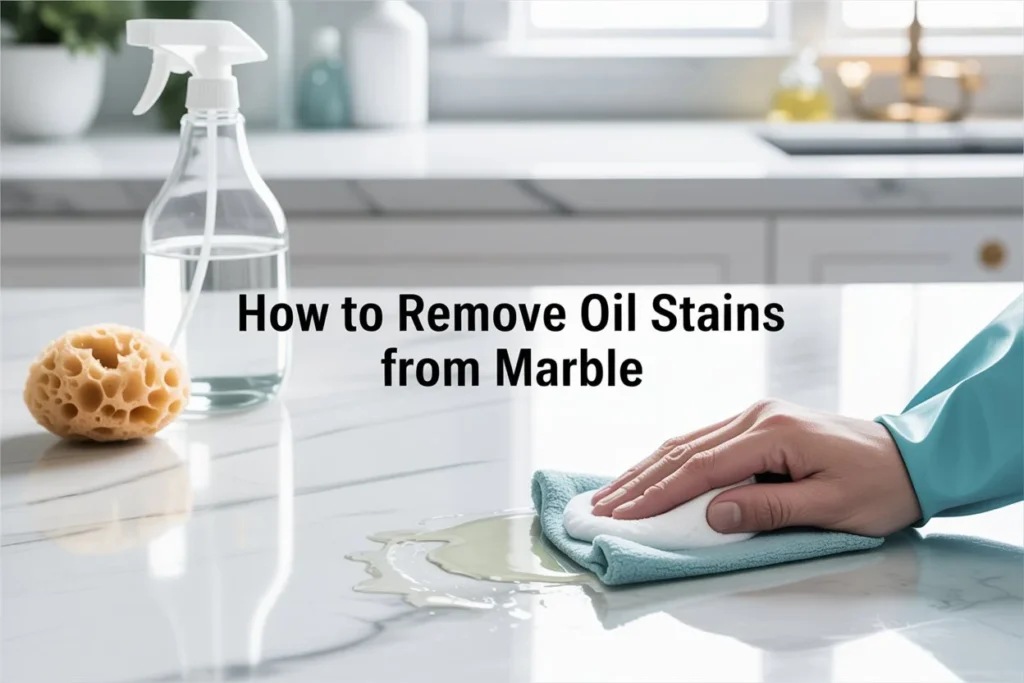
Step-by-Step Guide – How to Remove Oil Stains from Marble
Step 1: Blot the Stain Immediately
If you notice an oil spill, act fast. Use a clean paper towel or soft cloth to blot (not wipe) the area gently. This helps absorb as much oil as possible before it seeps deeper into the stone.
Avoid wiping, as that can spread the oil and worsen the stain.
Step 2: Prepare a Cleaning Poultice
For effective deep cleaning, create a poultice — a paste that draws oil out of marble pores.
Here’s how to make one at home:
- Mix baking soda with Saafco Saafco Washing Liquid — an antibacterial, grease-cutting cleaner that’s gentle on stone surfaces.
- Add a few drops of water until it forms a thick paste.
- Apply this mixture evenly over the stained area, ensuring full coverage.
This Saafco-based poultice works by combining baking soda’s oil-absorbing properties with Saafco’s powerful grease removal formula.
Step 3: Cover and Let It Sit
Cover the applied poultice with plastic wrap, and seal the edges using tape.
Let it sit undisturbed for 12–24 hours.
During this time, the paste will pull out oil and grease from the marble’s pores — similar to how clay draws out impurities from skin. You may notice the paste darkening as it absorbs oil, which means it’s working effectively.
Step 4: Remove the Poultice and Rinse
Once the poultice has dried, carefully scrape it off using a plastic scraper (avoid metal tools). Then, rinse the surface with warm water and wipe it dry using a soft microfiber cloth.
At this point, most of the oil should be gone, leaving your marble looking refreshed and cleaner.
Step 5: Polish and Seal the Surface
After removing the stain, restore your marble’s shine by using a marble polish or sealant. This not only enhances its glossy look but also creates a protective barrier that prevents future oil penetration.
For long-term maintenance, consider re-sealing your marble every 3 to 6 months, especially in high-use areas like kitchens.
Alternative Home Remedies for Oil Stain Removal
If you prefer natural methods or don’t have all the materials at hand, try these effective DIY marble cleaning remedies.
Using Cornstarch or Talcum Powder
For fresh oil spills, sprinkle cornstarch or talcum powder directly over the stain. Let it sit for a few hours to absorb grease naturally, then wipe clean with a soft cloth. This is ideal for small stains on tabletops or counters.
Hydrogen Peroxide & Baking Soda Mix (For Light Marble)
On white or light-colored marble, mix hydrogen peroxide with baking soda to form a gentle paste. Apply it to the stained area and let it rest for 10–15 minutes before rinsing. This method helps lift deep oil marks while maintaining the marble’s natural tone.
Ammonia & Detergent Mix (For Tough Stains)
For stubborn or old oil stains, mix a few drops of ammonia and Saafco Washing Liquid in warm water. Gently dab the mixture on the stain using a cloth, but use this method cautiously — only on durable marble surfaces.
Common Mistakes to Avoid When Cleaning Marble
Marble is a delicate natural stone — and cleaning it the wrong way can cause permanent damage. Avoid these common mistakes:
- Don’t use acidic cleaners like vinegar or lemon juice — they can etch and dull the surface.
- Avoid abrasive scrubbing pads — they can leave scratches.
- Don’t delay cleaning oil spills — the longer it sits, the deeper it penetrates.
Always opt for pH-neutral and gentle cleaning products like Saafco Washing Liquid, which is both powerful on grease and safe for marble.
Best Cleaning Products in Pakistan for Marble Maintenance
To maintain your marble’s shine and keep it stain-free, use the right products available locally in Pakistan. One of the most trusted choices is Saafco Washing Liquid — a grease-cutting yet marble-safe formula designed to tackle oil, food residue, and tough grease buildup effectively.
You can also pair it with:
- Marble sealants to protect the surface.
- Soft microfiber cloths for regular cleaning.
- Neutral pH detergents for deep maintenance.
Visit saafco.com to explore Saafco cleaning products — designed for powerful cleaning and lasting shine.
Preventing Future Oil Stains on Marble
A few small habits can go a long way in keeping your marble spotless:
- Apply a marble sealant every few months to block oil penetration.
- Clean oil spills immediately using a soft cloth and Saafco Washing Liquid.
- Use coasters, trays, or mats in the kitchen or dining area to prevent accidental spills.
With consistent care, your marble can stay glossy, elegant, and free from oil stains for years.
Conclusion – Keep Your Marble Surfaces Oil-Free & Shining
Oil stains can rob your marble of its natural shine, but with the right cleaning techniques, you can restore its beauty effortlessly.
From using Saafco Wash Liquid and baking soda poultices to regular polishing and sealing, these steps ensure your marble remains clean, smooth, and bright.
Don’t wait for stains to settle — act fast, clean smart, and protect your investment.
Protect your marble’s beauty with Saafco’s professional-grade cleaning range — tough on oil, gentle on stone.