 Skip to content

A clean factory is more than just a reflection of good housekeeping—it is a critical factor in operational efficiency, employee safety, equipment reliability, and regulatory compliance. Whether you operate a manufacturing plant, textile mill, food processing facility, pharmaceutical factory, warehouse, or chemical production unit, maintaining a hygienic and well-organized workplace directly impacts productivity and business success.
Modern factories face numerous cleaning challenges every day. Dust, grease, chemical spills, metal shavings, oil residue, production waste, and airborne contaminants accumulate on floors, machinery, conveyor systems, storage areas, and production lines. If left unmanaged, these contaminants can reduce equipment performance, increase maintenance costs, create workplace hazards, and even affect product quality.
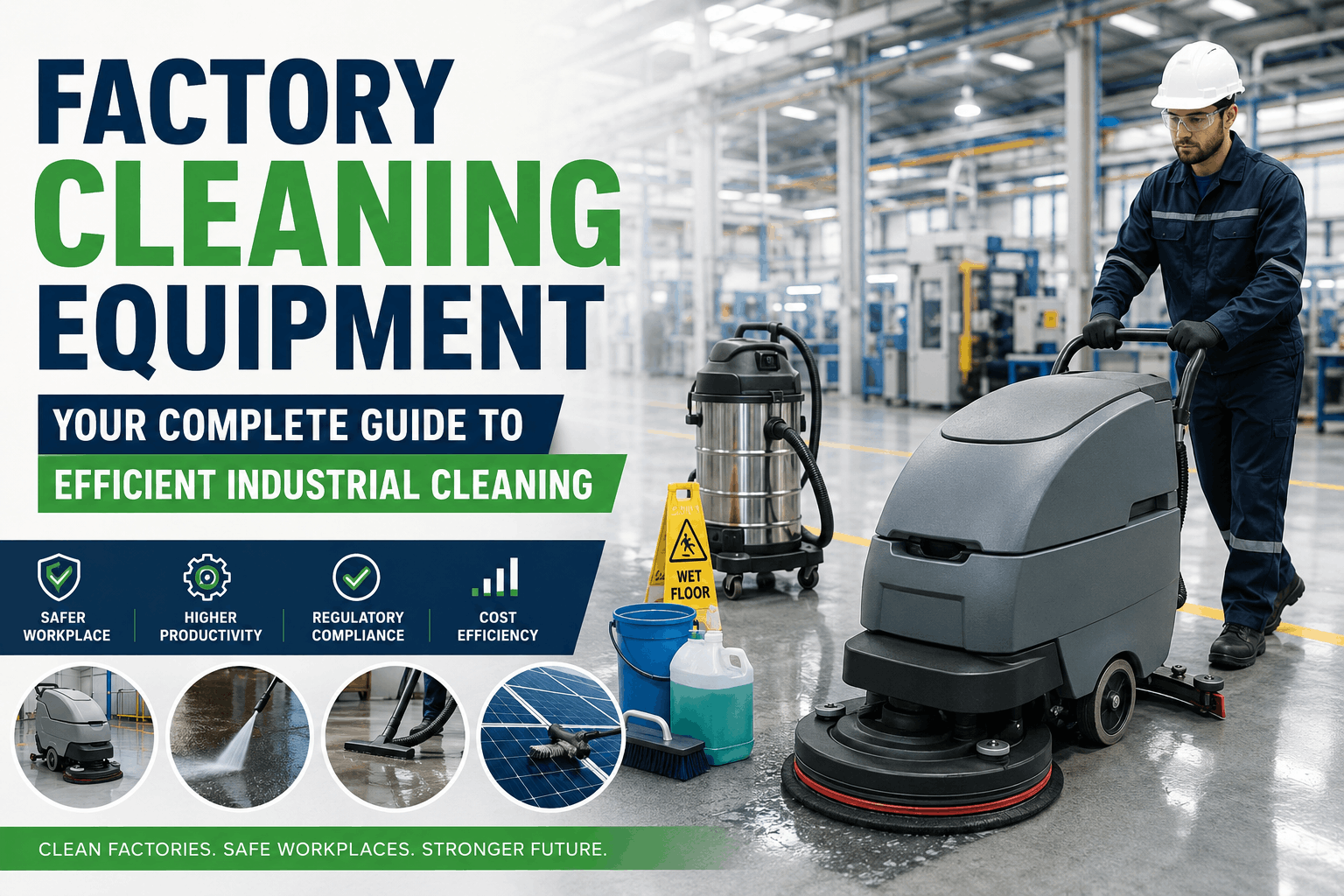
According to the International Labour Organization (ILO), approximately 2.93 million workers die each year from work-related causes, highlighting the importance of implementing strong workplace safety and hygiene practices. While these figures include many occupational risks beyond cleanliness, maintaining a clean and organized industrial environment plays a vital role in reducing preventable hazards and supporting safer operations.
Similarly, the U.S. Occupational Safety and Health Administration (OSHA) identifies poor housekeeping as a major contributor to workplace injuries, including slips, trips, falls, fire hazards, and blocked emergency exits. Proper industrial cleaning is therefore not simply a maintenance task—it is an essential component of workplace safety and risk management.
In Pakistan, rapid industrial growth has increased the demand for professional factory cleaning equipment across sectors such as textiles, pharmaceuticals, food manufacturing, automotive assembly, cement production, plastics, electronics, and logistics. Companies are investing in advanced industrial cleaning machines to improve operational efficiency, comply with health and safety regulations, extend machinery lifespan, and maintain international quality standards.
Selecting the right cleaning equipment, combined with high-quality industrial cleaning solutions, allows factories to reduce downtime, improve productivity, protect valuable assets, and create a healthier environment for employees.
This comprehensive guide explains everything you need to know about factory cleaning equipment, including its importance, different equipment types, industrial applications, buying considerations, and best practices for maintaining a clean and efficient manufacturing facility.
What Is Factory Cleaning Equipment?
Factory cleaning equipment refers to specialized machines, tools, and cleaning systems designed to remove dust, grease, dirt, chemical residues, production waste, and industrial contaminants from manufacturing facilities. Unlike household cleaning tools, industrial cleaning equipment is built to withstand continuous operation in demanding environments while delivering superior cleaning performance across large production areas.
Modern factories contain complex machinery, automated production lines, conveyor belts, storage facilities, loading bays, workshops, warehouses, and administrative offices. Each area requires specific cleaning methods to maintain hygiene, equipment efficiency, and workplace safety.
Factory cleaning equipment typically includes:
- Industrial floor scrubbers
- Ride-on floor scrubbers
- Walk-behind scrubbers
- Industrial floor sweepers
- Pressure washers
- Steam cleaners
- Wet and dry industrial vacuum cleaners
- HEPA filtration vacuum systems
- Dust extraction units
- Industrial degreasers
- Spill containment systems
- Conveyor belt cleaning equipment
- Tank cleaning systems
- High-reach cleaning tools
- Automatic floor cleaning machines
These machines are designed to remove:
- Dust accumulation
- Metal shavings
- Oil spills
- Chemical residues
- Grease deposits
- Packaging waste
- Production debris
- Fine particulate matter
- Industrial pollutants
- Food residues
- Water spills
Modern industrial cleaning equipment often incorporates advanced technologies such as automated scrubbing systems, high-efficiency motors, HEPA filtration, low-water cleaning systems, eco-friendly detergent compatibility, and programmable cleaning cycles. These features help reduce labor costs while improving cleaning consistency and operational efficiency.
When paired with high-quality industrial cleaning solutions from trusted manufacturers like Saafco, factories can achieve more effective cleaning while protecting sensitive equipment, factory floors, machinery, and work surfaces.
Why Investing in Factory Cleaning Equipment Matters
Many factory owners view cleaning as an operational expense rather than a business investment. In reality, professional cleaning equipment delivers measurable returns by improving safety, reducing equipment failures, minimizing downtime, and increasing productivity.
1. Protects Employee Health and Safety
Industrial environments expose workers to numerous hazards, including airborne dust, chemical vapors, oil spills, and slippery floors. Regular cleaning helps reduce these risks by maintaining safe working conditions.
OSHA emphasizes that effective housekeeping reduces workplace accidents caused by slips, trips, falls, fire hazards, and blocked access routes. Clean workplaces also improve visibility, reduce contamination, and support emergency preparedness.
Proper cleaning is especially important in industries handling:
- Chemicals
- Food products
- Pharmaceuticals
- Electronics
- Fine powders
- Hazardous materials
Industrial vacuum cleaners equipped with HEPA filters can capture fine dust particles before they circulate through the workplace, improving indoor air quality and reducing employee exposure.
2. Improves Operational Efficiency
Dirt, grease, and debris do more than make a factory look untidy—they interfere with production.
Dust accumulation inside motors, electrical panels, conveyor systems, and production equipment can increase wear, reduce cooling efficiency, and contribute to unexpected machine failures.
Regular cleaning helps:
- Improve machine performance
- Reduce production interruptions
- Increase equipment reliability
- Lower maintenance costs
- Extend the machinery’s lifespan
Preventive cleaning is considerably less expensive than emergency repairs or production downtime.
3. Supports Product Quality
Industries such as pharmaceuticals, food processing, electronics, cosmetics, and medical device manufacturing require exceptionally clean production environments.
Contamination from dust, grease, or foreign particles can lead to:
- Product defects
- Customer complaints
- Batch rejection
- Product recalls
- Financial losses
Maintaining hygienic production areas helps protect product quality while strengthening customer confidence.
4. Reduces Long-Term Maintenance Costs
Industrial machinery represents a major investment.
Routine cleaning prevents contaminants from damaging:
- Bearings
- Motors
- Electrical systems
- Cooling vents
- Hydraulic equipment
- Conveyor belts
- Production lines
Keeping machinery clean reduces wear and extends service life, resulting in lower maintenance costs over time.
5. Helps Meet Industry Standards
Many manufacturing facilities operate under internationally recognized management systems such as:
- ISO 9001 (Quality Management)
- ISO 14001 (Environmental Management)
- ISO 45001 (Occupational Health and Safety)
Maintaining a clean workplace supports compliance with these systems by demonstrating effective housekeeping, preventive maintenance, and operational control.
Factories supplying international customers often undergo regular audits where workplace cleanliness forms part of overall quality assessments.
Factory Cleaning by the Numbers
Research consistently shows that good housekeeping contributes to safer, more efficient industrial operations.
Some notable findings include:
- The International Labour Organization (ILO) estimates that occupational accidents and work-related diseases result in nearly 3 million deaths annually worldwide, emphasizing the importance of preventive workplace safety measures.
- OSHA identifies poor housekeeping as one of the leading contributors to slips, trips, falls, and fire hazards in industrial facilities.
- According to the National Safety Council (NSC), slip-and-fall incidents remain among the most common workplace injuries, many of which can be prevented through effective housekeeping and floor maintenance.
- Preventive maintenance programs—which include regular cleaning—can significantly reduce unplanned equipment downtime and extend machinery service life.
These statistics reinforce a simple principle: investing in professional factory cleaning equipment is not merely about appearance—it is a strategic investment in safety, productivity, and long-term profitability.
Good housekeeping is fundamental to accident and fire prevention. It reduces workplace hazards and contributes to a safer and more productive work environment.”
— Occupational Safety and Health Administration (OSHA)
This guidance highlights why leading manufacturers treat cleaning as a core operational process rather than an afterthought.
Similarly, industrial maintenance specialists widely recognize that preventive cleaning helps preserve machinery performance, improve energy efficiency, and reduce costly emergency repairs.
Real-World Example: How Professional Cleaning Improves Manufacturing Efficiency
Imagine a textile manufacturing facility in Faisalabad operating multiple weaving machines around the clock.
During production, cotton fibers, dust, oil mist, and packaging debris gradually accumulate across machinery, conveyor belts, electrical cabinets, and factory floors.
Initially, these deposits appear harmless.
However, over several weeks:
- Dust blocks ventilation openings.
- Oil residue creates slippery walking surfaces.
- Fine fibers accumulate around motors.
- Electrical panels trap airborne particles.
- Conveyor belts require more frequent maintenance.
The factory begins experiencing longer maintenance shutdowns, reduced production efficiency, and increased cleaning labor.
After introducing industrial ride-on floor scrubbers, HEPA industrial vacuum cleaners, pressure washers, and a preventive cleaning schedule supported by professional cleaning chemicals from Saafco, housekeeping standards improved dramatically. Equipment remains cleaner, maintenance intervals become more predictable, employee safety improves, and overall production efficiency increases.
This example demonstrates how investing in proper factory cleaning equipment supports operational excellence while protecting both employees and valuable industrial assets.
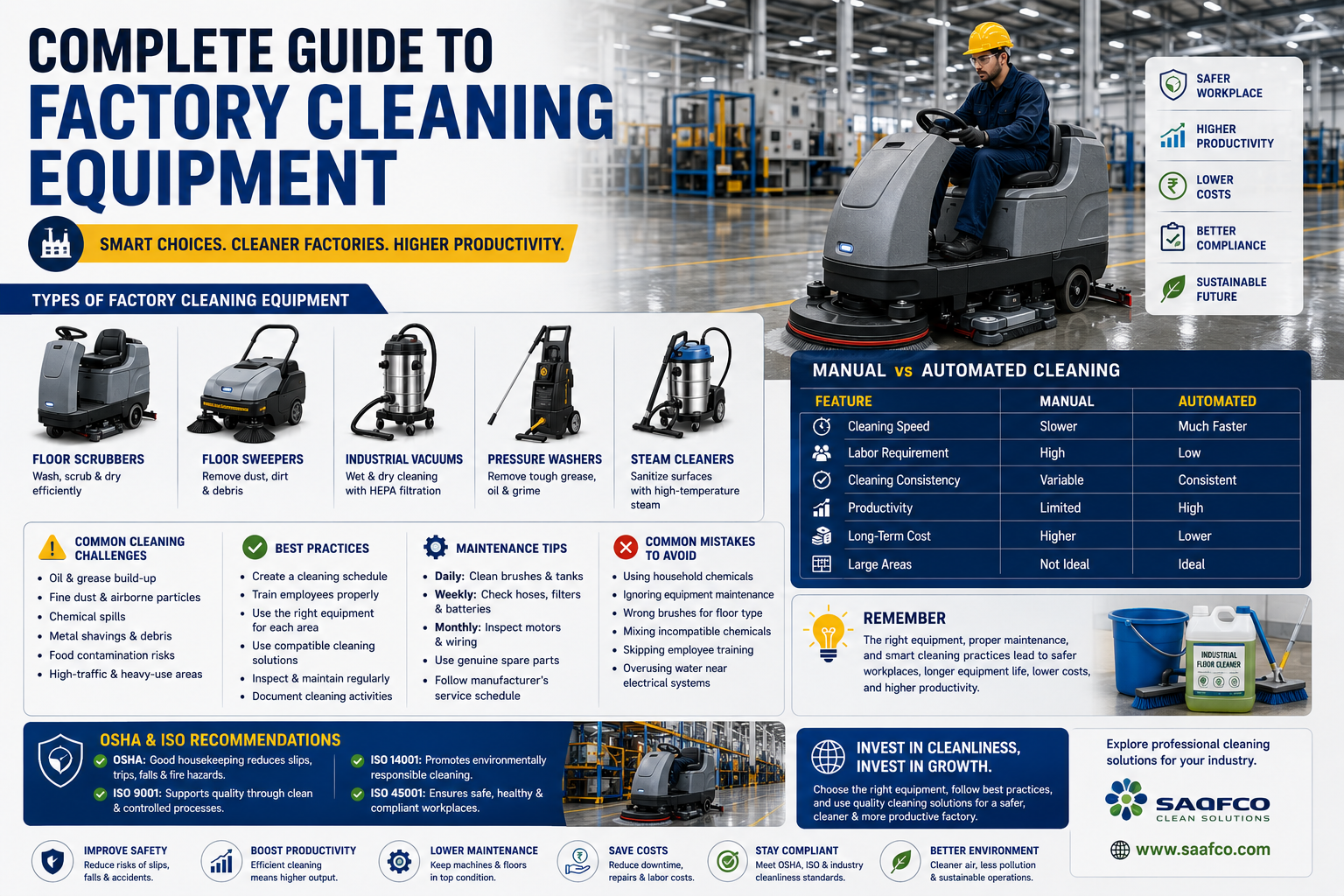
Industries That Need Factory Cleaning Equipment
Virtually every industrial sector benefits from specialized cleaning equipment, although the specific requirements vary depending on production processes and contamination risks.
Common industries include:
- Textile manufacturing
- Food processing plants
- Pharmaceutical manufacturing
- Chemical factories
- Automotive assembly plants
- Electronics manufacturing
- Plastic production facilities
- Cement factories
- Steel and metal fabrication plants
- Warehouses and logistics centers
- Beverage production facilities
- Printing and packaging industries
- Cold storage facilities
- Paper mills
- Fertilizer plants
Each industry faces unique cleaning challenges, ranging from grease and oil contamination to chemical spills, dust control, food safety, or sterile manufacturing environments. Choosing equipment tailored to these conditions helps maintain operational efficiency, protect product quality, and support regulatory compliance. Many factories in Pakistan need to comply with ISO and OSHA standards for cleanliness and safety. Regular cleaning with certified industrial equipment ensures compliance during audits and maintains quality assurance. Proper factory hygiene also aligns with international benchmarks, which is vital for businesses supplying products both locally and internationally.
In the next section, we’ll explore the different types of factory cleaning equipment, compare manual and automated solutions, and explain how to choose the right machines for your facility.
How to Choose the Right Factory Cleaning Equipment
Choosing the right factory cleaning equipment is one of the most important investments for maintaining a productive, safe, and compliant industrial facility. With hundreds of industrial cleaning machines available—from ride-on floor scrubbers and industrial vacuum cleaners to pressure washers and automated cleaning systems—selecting the right solution requires careful planning.
Rather than purchasing equipment based solely on price, businesses should evaluate their production environment, floor type, cleaning frequency, contamination levels, workforce requirements, and long-term operating costs. A well-planned investment not only improves workplace hygiene but also reduces maintenance expenses, extends equipment lifespan, and increases operational efficiency.
Before purchasing industrial cleaning equipment, consider the following factors.
1. Identify Your Factory’s Cleaning Requirements
Every manufacturing facility has unique cleaning challenges. A pharmaceutical plant requires sterile cleaning procedures, while a textile mill focuses on dust removal and fiber control. Food processing facilities must prevent cross-contamination, whereas automotive factories need powerful degreasers for oil and grease removal.
Ask yourself:
- What type of waste is produced?
- How large is the cleaning area?
- Are there hazardous chemicals involved?
- Does the factory require daily or weekly cleaning?
- Are production lines sensitive to dust contamination?
- Is there a need for food-safe or anti-bacterial cleaning solutions?
Understanding these requirements helps determine whether your facility needs industrial floor scrubbers, pressure washers, HEPA vacuum cleaners, steam cleaners, or specialized sanitation equipment.
2. Evaluate Floor Types
Different flooring materials require different cleaning methods.
Common industrial flooring includes:
- Concrete floors
- Epoxy-coated floors
- Ceramic tiles
- Vinyl flooring
- Anti-static flooring
- Stainless steel surfaces
- Warehouse flooring
- Loading dock surfaces
For example, epoxy-coated floors benefit from automatic floor scrubbers with non-abrasive brushes, while concrete floors may require heavy-duty sweepers and industrial degreasers to remove oil and grease buildup.
Using compatible cleaning chemicals, such as professional cleaning solutions from Saafco, helps maintain floor finishes without damaging protective coatings.
3. Consider Machine Capacity
Cleaning equipment should match your facility’s size and daily workload.
Questions to consider include:
- Cleaning width
- Water tank capacity
- Battery runtime
- Cable length
- Cleaning speed
- Productivity per hour
- Noise level
- Operator comfort
- Maintenance requirements
Large manufacturing facilities generally benefit from ride-on scrubbers capable of cleaning thousands of square meters per hour, while smaller factories often find walk-behind machines more practical and cost-effective.
4. Focus on Long-Term Value
The cheapest machine is rarely the most economical.
Consider:
- Spare part availability
- Warranty coverage
- Energy efficiency
- Water consumption
- Service network
- Repair costs
- Replacement parts
- Operating lifespan
A high-quality industrial cleaning machine may have a higher purchase price but significantly lower operating costs over its lifetime.
Types of Factory Cleaning Equipment
Modern factories require a combination of specialized cleaning equipment rather than relying on a single machine.
Industrial Floor Scrubbers
Industrial floor scrubbers wash, scrub, and dry factory floors in one operation.
Common types include:
- Ride-on floor scrubbers
- Walk-behind scrubbers
- Compact scrubbers
- Battery-powered scrubbers
These machines are ideal for:
- Warehouses
- Manufacturing plants
- Shopping malls
- Distribution centers
- Food factories
- Logistics facilities
Benefits include:
- Faster cleaning
- Lower labor costs
- Reduced water usage
- Improved floor safety
- Consistent cleaning quality
Industrial Floor Sweepers
Floor sweepers collect dust, sand, packaging materials, paper, metal shavings, and production debris before washing begins.
They are commonly used in:
- Textile mills
- Cement factories
- Steel plants
- Plastic manufacturing
- Warehouses
Modern sweepers feature advanced dust control systems that help improve indoor air quality.
Industrial Vacuum Cleaners
Industrial vacuum cleaners remove:
- Fine dust
- Powder
- Liquid spills
- Grease
- Metal particles
- Wood chips
- Chemical residue
Many industrial models use HEPA filtration, which captures microscopic particles and improves workplace air quality.
Wet and dry vacuum cleaners are particularly valuable in food processing, pharmaceutical manufacturing, and electronics production.
Pressure Washers
Pressure washers remove stubborn dirt from:
- Factory walls
- Outdoor equipment
- Heavy machinery
- Loading docks
- Vehicles
- Storage tanks
High-pressure water effectively removes grease, mud, and accumulated grime that conventional cleaning methods cannot.
Steam Cleaning Equipment
Steam cleaning uses high-temperature vapor to sanitize surfaces while minimizing chemical use.
Industries benefiting from steam cleaning include:
- Food processing
- Healthcare manufacturing
- Pharmaceutical facilities
- Commercial kitchens
Steam effectively removes bacteria, grease, and biofilm while reducing water consumption.
Dust Extraction Systems
Factories producing large amounts of airborne dust often require centralized dust extraction systems.
Examples include:
- Woodworking
- Cement production
- Textile manufacturing
- Flour mills
- Metal fabrication
Dust extraction improves air quality while reducing fire and explosion risks associated with combustible dust.
Which Factory Cleaning Equipment Is Best?
The best factory cleaning equipment depends on your industry and cleaning requirements. Large facilities often benefit from ride-on floor scrubbers and industrial sweepers, while food processing plants may require steam cleaners and HEPA-filter vacuum systems. Warehouses, automotive workshops, and manufacturing plants typically use a combination of scrubbers, pressure washers, and industrial vacuum cleaners for efficient cleaning.
Manual vs Automated Cleaning Equipment
Many businesses wonder whether manual cleaning equipment is sufficient or whether automated cleaning systems justify the investment.
| Feature | Manual Cleaning | Automated Cleaning |
|---|---|---|
| Initial Cost | Lower | Higher |
| Cleaning Speed | Slower | Much Faster |
| Labor Requirement | High | Lower |
| Cleaning Consistency | Operator Dependent | Highly Consistent |
| Water Usage | Higher | Optimized |
| Productivity | Limited | High |
| Large Factory Suitability | Poor | Excellent |
| Long-Term Cost | Higher | Lower |
Although manual cleaning tools remain useful for small spaces and detailed work, automated equipment delivers superior efficiency in medium and large industrial facilities.
Common Industrial Cleaning Challenges
Every factory faces different cleaning obstacles depending on its production processes.
Common challenges include:
Oil and Grease Build-Up
Automotive workshops, engineering facilities, and machine shops accumulate heavy grease deposits that require industrial degreasers and pressure washing.
Fine Dust
Textile factories, cement plants, and woodworking facilities generate airborne dust that settles on machinery, lighting, ventilation systems, and production equipment.
HEPA vacuum systems and dust extraction units help minimize contamination.
Chemical Spills
Chemical manufacturing facilities require specialized spill response equipment, chemical-resistant cleaning tools, and trained personnel.
Metal Shavings
Engineering workshops produce sharp metal particles that cannot be removed effectively using ordinary cleaning tools.
Industrial vacuum cleaners designed for metal debris improve both safety and equipment protection.
Food Contamination Risks
Food processing facilities must prevent cross-contamination through scheduled sanitation, steam cleaning, and food-safe cleaning chemicals.
High-Traffic Areas
Loading docks, warehouses, and production zones experience continuous forklift traffic that introduces dirt, tire marks, and debris.
Ride-on scrubbers help maintain these areas efficiently.
Best Practices for Factory Cleaning
Industry experts recommend implementing structured cleaning programs rather than reactive cleaning.
Best practices include:
- Develop written cleaning schedules.
- Clean production equipment after every shift.
- Remove spills immediately.
- Separate cleaning tools by production area.
- Train employees in proper cleaning procedures.
- Inspect cleaning equipment regularly.
- Use the correct cleaning solution for each surface.
- Document maintenance activities.
- Monitor indoor air quality.
- Store chemicals according to manufacturer instructions.
- Wear appropriate personal protective equipment (PPE).
- Dispose of industrial waste responsibly.
Pairing professional cleaning equipment with high-quality industrial cleaning solutions from Saafco helps improve cleaning effectiveness while protecting factory surfaces and equipment.
Maintenance Tips for Industrial Cleaning Equipment
Even the best cleaning machines require regular maintenance to perform efficiently.
Daily maintenance includes:
- Empty recovery tanks
- Clean brushes
- Inspect hoses
- Check batteries
- Refill cleaning solution
- Remove debris
Weekly maintenance includes:
- Lubricate moving parts
- Inspect electrical cables
- Test safety switches
- Clean filters
- Examine wheels
- Tighten loose components
Monthly maintenance includes:
- Replace worn brushes
- Inspect motors
- Check vacuum performance
- Review service logs
- Perform calibration where required
Preventive maintenance reduces unexpected breakdowns and extends equipment life.
Common Mistakes to Avoid
Many factories unintentionally reduce cleaning efficiency by making avoidable mistakes.
Common errors include:
❌ Using household cleaning products on industrial machinery.
❌ Ignoring equipment maintenance.
❌ Allowing oil spills to remain on floors.
❌ Using incorrect brushes that scratch epoxy flooring.
❌ Mixing incompatible cleaning chemicals.
❌ Skipping employee training.
❌ Cleaning only visible surfaces while neglecting machinery interiors.
❌ Overusing water near electrical equipment.
❌ Failing to inspect cleaning equipment before use.
❌ Purchasing machines based solely on price instead of operational requirements.
Avoiding these mistakes improves workplace safety, extends equipment lifespan, and reduces overall maintenance costs.
OSHA and ISO Recommendations for Industrial Cleaning
Leading international organizations emphasize that effective housekeeping is fundamental to workplace safety and operational excellence.
The Occupational Safety and Health Administration (OSHA) recommends maintaining clean walking-working surfaces, promptly cleaning spills, keeping aisles and emergency exits unobstructed, and implementing regular housekeeping programs to reduce slips, trips, falls, and fire hazards.
Similarly, internationally recognized management standards encourage structured cleaning and maintenance practices:
- ISO 9001 supports consistent operational processes that help maintain product quality.
- ISO 14001 promotes environmentally responsible cleaning practices, including efficient water use and proper waste management.
- ISO 45001 emphasizes workplace health and safety through hazard identification, preventive maintenance, employee training, and safe housekeeping procedures.
Factories that integrate these principles into their daily operations often experience:
- Improved employee safety
- Better equipment reliability
- Reduced operational downtime
- Higher audit readiness
- Stronger customer confidence
- Greater long-term productivity
A proactive cleaning strategy—supported by appropriate industrial cleaning equipment, trained personnel, preventive maintenance, and reliable cleaning solutions such as those offered by Saafco—helps businesses build cleaner, safer, and more efficient manufacturing environments while supporting sustainable industrial growth.
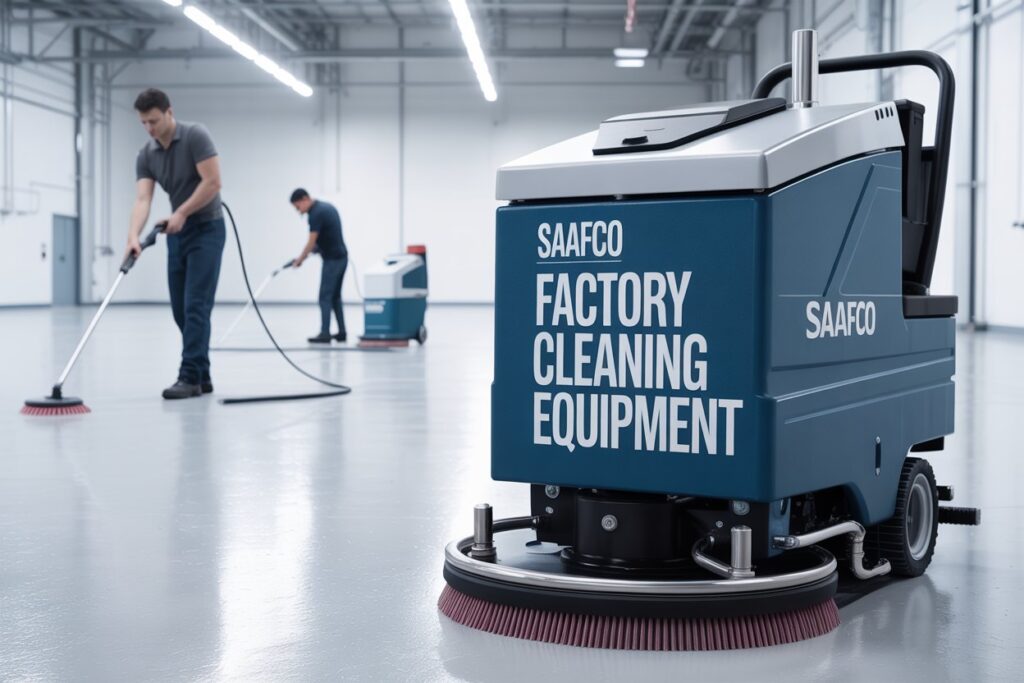
Pakistan’s industrial sector continues to expand across textiles, food processing, pharmaceuticals, automotive manufacturing, cement production, plastics, packaging, logistics, and engineering. As production volumes increase, maintaining clean, safe, and efficient manufacturing facilities has become a business necessity rather than an option.
Factories operating in cities such as Karachi, Lahore, Faisalabad, Sialkot, Gujranwala, Islamabad, Multan, and Peshawar face unique cleaning challenges due to dust, humidity, industrial pollution, heavy vehicle traffic, and changing weather conditions. These environmental factors can accelerate dirt accumulation, reduce equipment efficiency, and increase maintenance requirements.
Choosing the right factory cleaning equipment, implementing preventive maintenance schedules, and using high-quality industrial cleaning solutions help businesses improve productivity, protect valuable machinery, reduce operating costs, and maintain compliance with workplace safety standards.
How to Choose the Best Factory Cleaning Equipment in Pakistan
Before investing in industrial cleaning machines, evaluate your facility carefully.
Consider Your Industry
Different industries require different cleaning solutions.
| Industry | Recommended Equipment |
|---|---|
| Textile Mills | Industrial vacuum cleaners, ride-on sweepers, dust extraction systems |
| Food Processing | Steam cleaners, floor scrubbers, food-safe sanitation equipment |
| Pharmaceutical Manufacturing | HEPA vacuum systems, steam cleaners, disinfecting equipment |
| Automotive Workshops | Pressure washers, industrial degreasers, wet & dry vacuum cleaners |
| Warehouses & Logistics | Ride-on floor scrubbers, floor sweepers, industrial vacuums |
| Chemical Plants | Chemical-resistant cleaning equipment, spill containment systems |
| Electronics Manufacturing | HEPA-filter vacuums, anti-static cleaning tools |
Consider Local Environmental Conditions
Pakistan experiences:
- High dust levels
- Construction debris
- Dry weather
- Seasonal monsoon rains
- Heavy industrial pollution in urban areas
These conditions require more frequent cleaning than many other regions.
Factories located near highways, industrial estates, or cement plants often benefit from daily sweeping and scheduled deep cleaning to prevent dust accumulation on machinery, production lines, and ventilation systems.
Availability of Service and Spare Parts
Before purchasing industrial cleaning equipment, ensure:
- Local service centers are available.
- Spare parts can be sourced quickly.
- Technical support is accessible.
- Operator training is provided.
- Warranty coverage meets your operational requirements.
Reliable after-sales support minimizes downtime and protects your investment.
Why High-Quality Cleaning Chemicals Matter
Industrial cleaning machines deliver the best results when paired with cleaning solutions formulated for commercial and industrial applications.
Using inappropriate household detergents or abrasive chemicals may:
- Damage to machine components
- Leave unwanted residue
- Reduce cleaning efficiency
- Corrode sensitive surfaces
- Shorten equipment lifespan
Professional-grade cleaning products are designed to remove grease, oil, dirt, and industrial contaminants while remaining compatible with factory equipment and floor finishes.
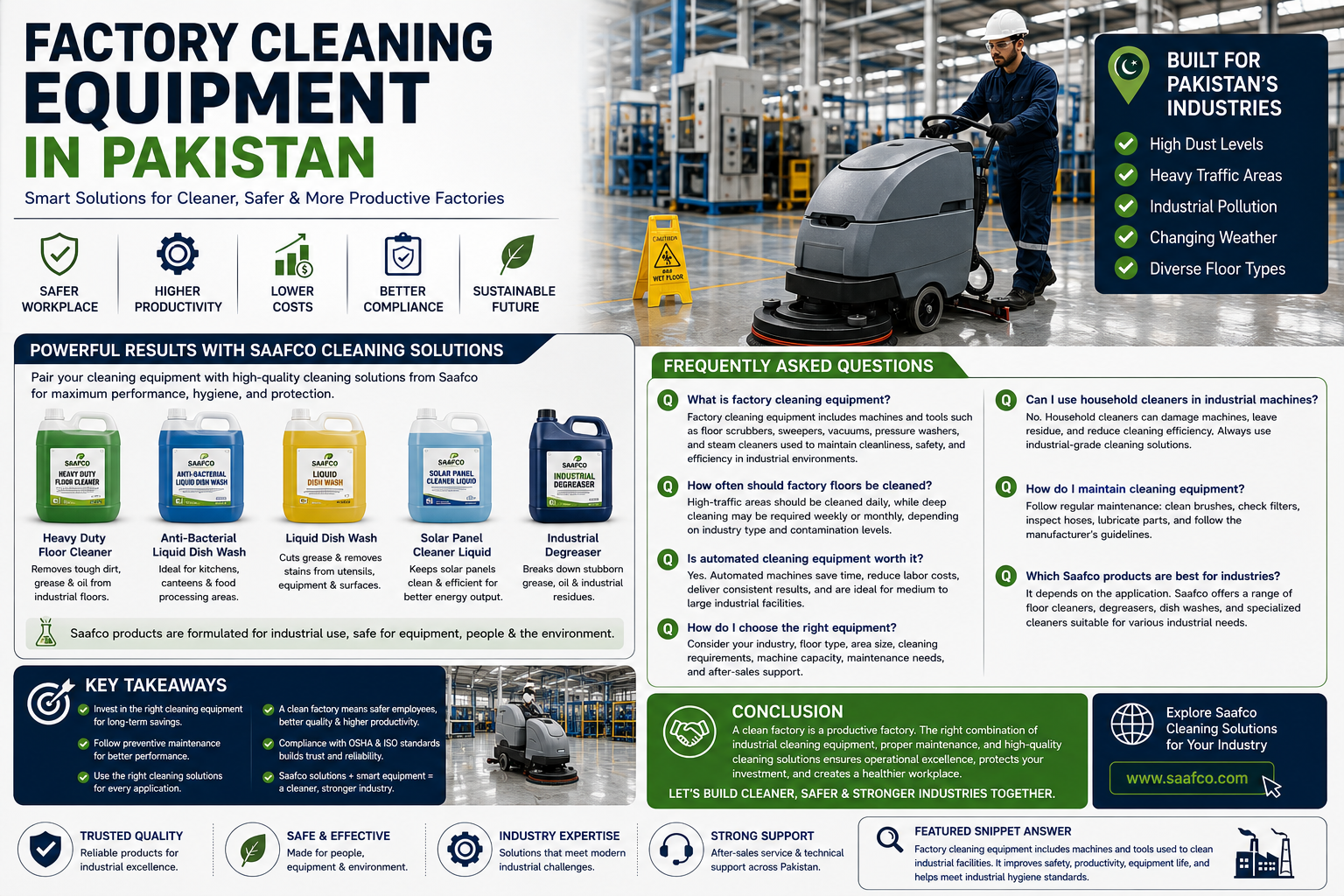
Why Choose Saafco Cleaning Solutions?
While industrial cleaning equipment performs the mechanical cleaning, professional cleaning chemicals play an equally important role in achieving consistent results.
Saafco offers a range of cleaning products suitable for industrial, commercial, and institutional environments.
Depending on the application, businesses may consider:
Saafco Industrial Cleaning Solutions
✔ Industrial cleaning liquids
✔ Anti-bacterial cleaning solutions
✔ Heavy-duty degreasing products
✔ Glass and surface cleaners
✔ Floor cleaning solutions
✔ Solar Panel Cleaner Liquid for maintaining photovoltaic systems installed in factories and commercial buildings
Using the appropriate cleaning solution for each application helps improve cleaning efficiency while protecting machinery, flooring, and work surfaces.
Rather than relying on one product for every task, factories should select cleaning chemicals based on the specific surface, contamination level, and operational requirements.
Return on Investment (ROI)
Many businesses initially focus on the purchase price of industrial cleaning equipment.
However, the true value lies in long-term operational savings.
Professional factory cleaning equipment can help reduce:
- Labor costs
- Equipment downtime
- Machinery wear
- Workplace accidents
- Repair expenses
- Product contamination
- Water consumption
- Cleaning time
At the same time, it can improve:
- Employee safety
- Production efficiency
- Product quality
- Customer confidence
- Regulatory compliance
- Equipment lifespan
- Overall operational productivity
For growing factories, these long-term benefits often outweigh the initial investment.
Top Brands and Suppliers in Pakistan
Saafco provides a reliable range of cleaning solutions that complement industrial equipment. For purchasing cleaning machines and liquids in Pakistan, always opt for authorized dealers and verified suppliers. Features, warranties, and service support must be checked to ensure long-term reliability.
How to Maintain Factory Cleaning Equipment for Longevity
Regular Cleaning and Inspection
Daily and weekly maintenance prevents breakdowns and ensures optimal performance. Incorporating preventive maintenance routines with high-quality cleaning liquids like Saafco Solar Panel Cleaner Liquid can protect sensitive equipment.
Proper Storage and Handling
Store equipment in dry, safe areas to prevent rust, electrical hazards, and mechanical damage. Follow storage best practices to extend machine life.
Servicing and Spare Parts
Use authorized service centers and genuine parts to maintain efficiency and durability. Saafco products are compatible with most industrial cleaning setups, ensuring consistent results and machine protection.
Frequently Asked Questions (FAQs)
1. What is factory cleaning equipment?
Factory cleaning equipment includes industrial machines and tools used to clean and maintain manufacturing and industrial facilities. Common examples include floor scrubbers, floor sweepers, industrial vacuum cleaners, pressure washers, steam cleaners, dust extraction systems, and specialized cleaning equipment.
2. Why is factory cleaning important?
Regular factory cleaning helps improve workplace safety, reduce slip and contamination risks, protect machinery and equipment, improve employee health, maintain product quality, reduce downtime, and support compliance with workplace safety and industry standards.
3. Which industries use industrial factory cleaning equipment?
Industrial cleaning equipment is widely used in textile factories, food processing plants, pharmaceutical facilities, automotive manufacturing, plastics and electronics industries, warehouses, logistics centers, chemical plants, steel fabrication facilities, packaging factories, cement plants, and other manufacturing environments.
4. What is the difference between a floor sweeper and a floor scrubber?
A floor sweeper is designed to remove loose dust, dirt, debris, and waste from floors. A floor scrubber uses water, brushes, and cleaning solutions to wash hard surfaces and often dry them at the same time. Many factories use both machines for complete floor maintenance.
5. What is the best factory cleaning equipment for a small factory?
For small factories, compact walk-behind floor scrubbers, floor sweepers, industrial vacuum cleaners, and pressure washers are often practical choices. The best equipment depends on the factory’s floor size, surface type, level of dirt, and cleaning requirements.
6. How often should factory floors be cleaned?
High-traffic production areas may require daily cleaning, while less frequently used areas can be cleaned according to a weekly or scheduled maintenance plan. Deep cleaning may be performed weekly or monthly depending on production activity, dust levels, contamination risks, and industry requirements.
7. Are automated factory cleaning machines worth the investment?
Yes. Automated cleaning machines can improve cleaning consistency, reduce labor requirements, increase productivity, minimize downtime, and provide better long-term value, particularly for medium-sized and large industrial facilities.
8. What should I consider when buying factory cleaning equipment?
Important factors include the size of the facility, floor type, cleaning capacity, machine operating time, battery life, water and chemical consumption, ease of maintenance, operator comfort, safety features, spare parts availability, warranty support, and compatibility with suitable industrial cleaning solutions.
9. Can industrial cleaning equipment improve workplace safety?
Yes. Proper cleaning equipment helps remove dust, oil, grease, debris, spills, and other hazards that can cause slips, accidents, contamination, or equipment problems. A clean facility supports a safer and healthier working environment.
10. How should factory cleaning equipment be maintained?
Regular maintenance may include cleaning brushes and filters, emptying tanks, checking hoses and electrical components, inspecting batteries, lubricating moving parts where required, replacing worn components, and following the manufacturer’s recommended service schedule.
11. How often should industrial cleaning machines be serviced?
The recommended service interval depends on the machine type, operating hours, and usage conditions. Many industrial cleaning machines benefit from routine professional servicing every 3–6 months, while heavily used equipment may require more frequent inspections and maintenance.
12. Which cleaning chemicals should be used with industrial cleaning machines?
Use professional cleaning solutions that are compatible with the specific machine, surface, and type of contamination. The correct cleaning product can improve cleaning performance while helping protect equipment and surfaces. Always follow the equipment manufacturer’s recommendations and product instructions.
13. Are eco-friendly factory cleaning solutions available in Pakistan?
Yes. Businesses can choose environmentally responsible cleaning products and equipment designed to reduce unnecessary water, chemical, and energy consumption. The most suitable solution depends on the cleaning application, surface, and industry requirements.
14. Can I rent factory cleaning equipment instead of buying it?
Yes. Renting can be useful for temporary projects, seasonal cleaning, or short-term requirements. However, for facilities that require regular, long-term cleaning, purchasing the right equipment may provide better value and availability over time.
15. How can I choose the right cleaning equipment for my factory?
Start by assessing your facility’s size, floor surfaces, type of dirt or contamination, cleaning frequency, available labor, safety requirements, and budget. For larger facilities, a combination of sweepers, scrubbers, industrial vacuums, pressure washers, and suitable cleaning solutions may provide the most efficient results.
16. Can Saafco cleaning products be used for industrial cleaning?
Saafco offers a range of cleaning solutions for different applications. The right product should be selected according to the surface, equipment, and cleaning requirement. Using a suitable professional cleaning solution with the correct equipment can help improve cleaning results and support efficient facility maintenance.
Conclusion & Buying Tips
Factory cleaning is far more than a routine housekeeping task—it is a strategic investment in workplace safety, operational efficiency, equipment reliability, regulatory compliance, and long-term business growth. A clean industrial environment helps reduce accidents and downtime, improve productivity and product quality, protect valuable machinery, and create a healthier workplace for employees.
Whether you operate a textile mill, food processing facility, pharmaceutical plant, warehouse, engineering workshop, or manufacturing factory, choosing the right combination of industrial cleaning equipment and professional cleaning solutions can significantly improve daily operations. Before making a purchase, consider your facility’s size, floor and surface types, production processes, contamination risks, safety requirements, and maintenance needs. High-quality equipment, combined with a preventive cleaning schedule and suitable industrial cleaning products, delivers better long-term value and more consistent results.
Pairing the right cleaning machines with trusted solutions from Saafco can further maximize cleaning efficiency and hygiene across different applications. Saafco offers professional cleaning products designed to complement industrial cleaning processes, including antibacterial and dishwashing solutions as well as specialized products such as solar panel cleaner liquid. Using the right product for the right application helps protect machinery and work surfaces while supporting a cleaner, safer, and more productive environment.
A cleaner factory is not just more presentable—it is safer, more productive, more efficient, and better prepared for future growth. Explore reliable factory cleaning equipment and professional Saafco cleaning solutions available in Pakistan to improve your industrial hygiene and operational efficiency.